
- June 18, 2026
- by Almifthaah
Understanding Tolerance and Precision in INSIZE Tools: Why They Matter in Quality Control
Table of Contents
ToggleKey Takeaways
- Tolerance is the set of permissible deviations from the set measurement of a product.
- Precision is used to guarantee consistency and repeatability of measurement results.
- The INSIZE tools help to increase the accuracy of quality control and decrease defects.
- Almifthaah provides dependable measurement solutions for quality control in industry.
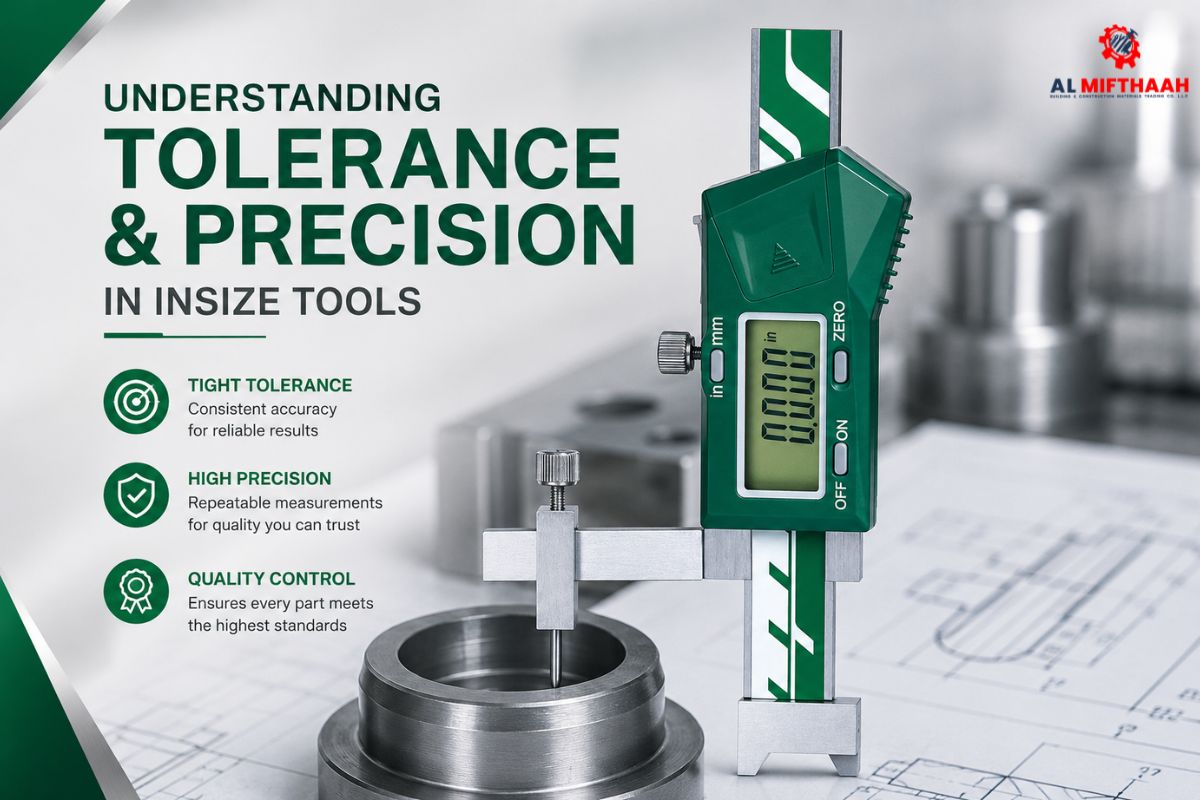
Tolerance and precision are two of the most important factors in quality control. In the simplest terms- tolerance is the range of variation allowed for a product dimension, and precision is the consistency of a measuring device in giving the correct measurement. By utilizing reliable measuring instruments, manufacturers can keep their products within the acceptable quality range, minimize defects, and ensure that they meet industry standards.
Therefore, from automotive manufacturing and aerospace to industrial production and fabrication to machining, these concepts are vital to making accurate measurements and keeping customers happy.
What are tolerance and precision?
What is Tolerance?
The tolerance is the acceptable range of variation for a measurement.
For example, when the diameter of a shaft is given as 50 mm ± 0.02 mm, any measurement from 49.98 mm to 50.02 mm will be accepted.
- Tolerance helps manufacturers.
- Maintain product functionality.
- Ensure component compatibility.
- Meet engineering specifications
- Reduce production errors
What is Precision?
Precision is a term used to describe how consistent repeated measurements are.
Moreover, a measuring instrument is precise if the same dimension will be measured time after time and the values obtained are close to the same value.
Precision is essential in quality control teams, as inaccurate measurements will result in flawed inspections and rework, which can be costly.
Why do they matter in quality control?
Good quality control starts with good measurements.
If not achieved by the use of tolerance management and precision measurement:
- Product defects increase.
- Manufacturing costs rise.
- Customer complaints become more common.
- Production efficiency decreases.
- There can be problems with compliance.
To ensure that each component is the correct size, quality inspectors use sophisticated measuring instruments. It is at this point that an INSIZE measuring instrument becomes very important.
Furthermore, INSIZE tools are known for their accuracy and reliability, which is vital to ensure the consistent quality of products throughout the manufacturing process.
How INSIZE tools improve measurement accuracy?
1. Digital Measurement Technology
Today’s INSIZE instruments are designed for swift and accurate readings.
Popular instruments include:
- Digital calipers
- Micrometers
- Height gauges
- Dial indicators
- Bore gauges
However, these tools are highly favored by many manufacturers in search of an INSIZE digital caliper Dubai solution due to their easy-to-read measurements and elimination of human error.
2. Consistent Quality Verification
Precision tools enable the inspector to:
- Identify dimensional deviations as early as possible.
- Monitor production quality
- Verify tolerances accurately.
- Reduce rejection rates
This means companies can enhance efficiency and ensure high-quality products.
3. Reliable Performance
Industrial instruments must be precise and frequently utilized.
Collaborating with an experienced INSIZE supplier in Dubai ensures businesses can access authentic products with reliable performance, ensuring long-term satisfaction.
Benefits of using INSIZE measuring instruments
- Better Product Quality
Measurements are used to determine if components are built to the requirements of the design.
- Reduced Manufacturing Costs
Early detection of dimensional errors minimizes waste and rework.
- Improved Customer Satisfaction
When products are shipped consistently, there are fewer returns and greater customer confidence.
- Faster Inspection Process
Digital tools help to streamline measurement tasks and boost productivity.
- Compliance with Industry Standards
Good measurement instruments facilitate the ability of an organization to fulfill ISO and other quality requirements.
Therefore, for many industrial buyers, sourcing through trusted INSIZE Measuring Instruments dealers in Dubai provides them the authenticity of the product and technical support.
How precision measurement reduces production errors?
Imagine a machine shop manufacturing metal shafts for manufacturing equipment.
During production, each shaft is measured by the inspector using INSIZE digital calipers and micrometers, and the diameter of the shafts is within the limit of 25 mm ± 0.01 mm.
The measuring tools give accurate and repeatable readings; operators are able to find the part that has not met the required tolerance in a few seconds.
As a result:
- Faulty components are identified in a timely manner.
- Waste from material is minimized.
- Production delays are minimized.
- The needs of the customers are always fulfilled.
However, this real-life example illustrates the importance of using precision measurement devices in ensuring quality control throughout manufacturing processes.
Industry insight example
Modern manufacturing is becoming more sensitive and demanding for quality levels. Precision industries like aerospace, vehicle, medical device, and precision engineering demand micro-level measurement accuracy.
Many quality professionals are also involved in building quality supplier relationships with suppliers like Saif Precision tools supplier in UAE, to find a dependable metrology solution to meet the advanced inspection requirements.
Therefore, a rise of the digital measurement system and the growing need for precision in the present competitive manufacturing world.
Final thoughts
Tolerance and precision are key aspects of successful quality control. Tolerance represents acceptable limits of measurement; precision indicates consistency in the inspection results. They work together to achieve these objectives: defect reduction, efficiency, and customer satisfaction.
Businesses can enhance their quality control systems and improve manufacturing results by investing in top-tier measurement technology from trusted suppliers, such as Almifthaah. From digital calipers to micrometers and beyond, Almifthaah offers solutions that ensure precise and consistent measurements across various industries.
Frequently asked questions
The acceptable range of variation in a measurement is called “tolerance,” and consistency of repeated measurements is called “precision.”
Precision is key in ensuring consistency in measurement, allowing manufacturers to detect defects with greater precision and control product quality.
INSIZE instruments are employed in dimensional inspection, quality control, calibration, and precision measurement of different industries.
It offers accurate digital displays, reduces reading mistakes, and allows for quicker inspection than conventional reading techniques.
Authorized suppliers offering quality products, technical support, calibration, and after-sales service should be considered by businesses.
How Long Do Mounted Points Last and When Should You Replace Them?
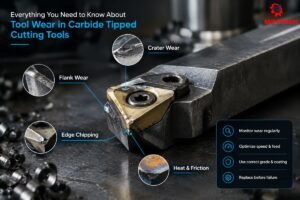
Everything You Need to Know About Tool Wear in Carbide Tipped Cutting Tools