- June 11, 2026
- by Almifthaah
Face Mill vs End Mill vs Indexable Cutter: Key Differences Explained
Table of Contents
ToggleKey Takeaways
- Face mills are best for machining large flat surfaces.
- End mills are perfect for slotting, profiling, and complex machining tasks.
- Cost-effective solutions in high-volume production are indexable cutters.
- Careful selection of the right cutter is essential for increased productivity, tool life, and machining accuracy.
To ensure increased machining accuracy, productivity, and tool life, it is important to know the difference between a face mill, end mill, and indexable cutter when selecting a milling tool. A face mill is primarily used for making flat surfaces, an end mill is used for cutting and profiling more complex surfaces, and an indexable cutter has replaceable inserts and is used for high-volume production.
Manufacturers, machine shops, and industries seeking a dependable cutting and milling tool in Dubai can greatly benefit from choosing the right tool, which can enhance their efficiency and minimize production expenses. Being a trusted supplier, Almifthaah assists businesses in selecting the appropriate milling solutions for their machining needs.
What are face mills, end mills, and indexable cutters?
What is a Face Mill?
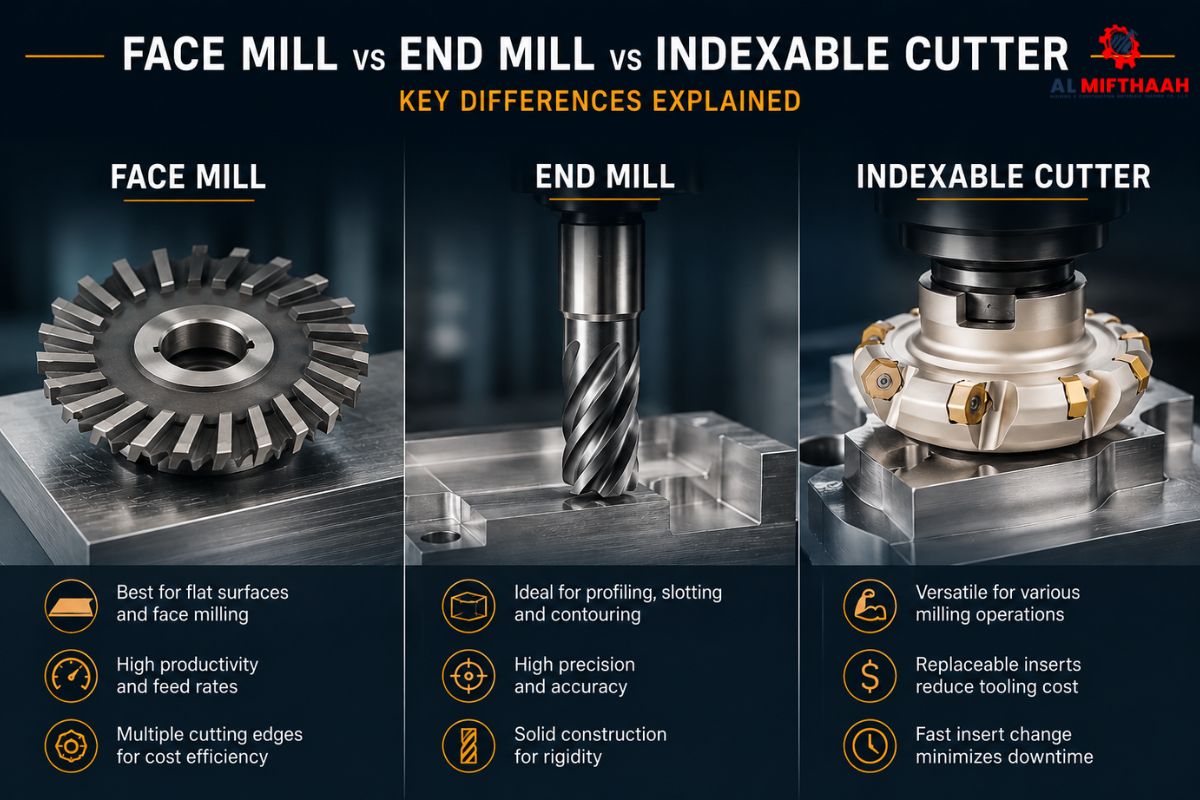
A face mill is a milling cutter mainly referred to for the milling of large flat surfaces. Both cutting edges are located on the face and outer face of the tool, enabling a quick removal of the material.
Common applications include:
- Surface finishing
- Facing operations
- Large metal components
- Precision flat machining
One of the more popular types is the indexable insert face mill cutter, a type that permits worn inserts to be replaced without the need to replace the entire cutter.
What is an End Mill?
An end mill is a multi-purpose cutting tool that is used for:
- Slotting
- Contouring
- Profiling
- Pocket milling
- Complex machining operations
Unlike face mills, end mills cut using both the bottom and side edges.
Therefore, the Single Flute Carbide Endmill UAE market is expanding rapidly due to the many benefits these tools offer, such as superb chip evacuation and improved cutting speeds, particularly during aluminum machining.
What is an indexable cutter?
An indexable cutter is a cutter that has replaceable carbide inserts rather than a solid cutting edge.
When an insert becomes worn:
- Rotate the insert.
- Use a fresh cutting edge.
- Machine without changing the tool body.
Moreover, this design would minimize tooling costs and machine downtime and is suitable for production.
In Dubai, there are a large number of manufacturers who look for high-performance solutions like Saif Precision tools supplier in UAE
for their CNC operations by using an experienced indexable milling cutter supplier in Dubai.
Quick comparison table
| Feature | Face Mill | End Mill | Indexable Cutter |
| Primary Use | Surface machining | Profiling and slotting | High-volume machining |
| Cutting Direction | Face cutting | Side and bottom cutting | Depends on insert design |
| Material Removal Rate | High | Moderate | Very High |
| Tool Cost | Medium | Medium | Higher initial cost |
| Maintenance | Moderate | Tool replacement required | Insert replacement only |
| Best For | Flat surfaces | Detailed machining | Production machining |
Face mill vs end mill vs indexable cutter
1. Cutting Performance
Face mills are used to remove material at a rapid rate from large areas. End mills have more flexibility when working on complex machining. Indexable cutters offer great productivity for repetitive industrial applications.
2. Tool Life
Cutters that are indexable will have the longest useful life; only the inserts need to be replaced.
Benefits include:
- Lower tooling expenses
- Reduced downtime
- Consistent cutting quality
3. Cost Efficiency
End mills might prove to be more cost-effective for small jobs. Because of replaceable inserts, indexable cutters are more cost-effective for large-scale production.
That’s why many industries prefer to use a dependable indexable milling cutter supplier in Dubai to maximize the cost of their operations in the process of machining.
4. Precision and Versatility
End mills are the best tool for the job when machining:
- Grooves
- Slots
- Complex geometries
- Mold components
Face mills work best on flat and smooth surfaces, and indexable cutters are ideal for repetitive production jobs.
Benefits of choosing the right cutter
There are a number of benefits to choosing the appropriate milling cutter:
- Higher Productivity
The correct tool removes material more quickly and efficiently and minimizes cycle time.
- Better Surface Finish
Appropriate cutter selection helps to enhance part quality and reduces any additional finishing process.
- Lower Operating Costs
A low-cost indexable insert face mill cutter can pay for itself over the long term.
- Longer Tool Life
The selection of the suitable cutter geometry helps in minimizing wear and enhancing operational performance.
- Improved Machining Accuracy
Tight tolerances and consistent results are achieved by using the right tools.
At Almifthaah, customers are guided by professionals to choose the optimal milling tools according to the type of material, machine capacity, and production volume.
Real manufacturing example
A UAE precision engineering company was required to manufacture aluminum housings for industrial equipment.
They started by using conventional end mills for all operations. The accuracy was satisfactory, but the machining time was still high.
Following discussions with a few machining specialists, they have chosen to use:
- Face mills for surface preparation
- End mills for pocket machining
- Indexable cutters for high-volume roughing
The result was:
- Faster production cycles
- Reduced tooling costs
- Improved surface finish
- Increased machine utilization
This example shows one reason why businesses that purchase cutting and milling tools Dubai should consider the type of cutter that should be used for a particular operation instead of using just one tool for all operations.
Firms also collaborate with reputable suppliers like Almifthaah and top-notch precision tooling manufacturers for uniformity in machining.
Conclusion
It is important to understand the differences among face mills, end mills, and indexable cutters in order to obtain maximum machining performance. Each type of cutter has its own advantages, including face mills for surface machining, end mills for detailed cutting, and indexable cutters for high production efficiency.
By understanding the different types of cutting and milling tools available in Dubai and selecting the right one for the job, businesses can optimize their productivity and cut down on expenses. Almifthaah provides customers with high-quality milling solutions, technical expertise, and industry-specific assistance for producing top-notch machining products.
Talk to Almifthaah today about your milling cutter needs and improve your production efficiency.
Frequently asked questions
There’s no single best or worse option. Face mills are used for flat surfaces; end mills are used for slotting, profiling, and fine cutting operations.
A face mill that is equipped with replaceable carbide inserts, which enables rapid change of the inserts without replacing the cutter.
They provide lower operating costs, longer tool life, less downtime, and increased productivity.
It is a popular choice for the machining of aluminum and nonferrous metals where high-speed chip removal is desired.
Consider factors such as the nature of the material, type of machining process, production quantity, the required surface finish, and machine capacity.

How Long Do Mounted Points Last and When Should You Replace Them?
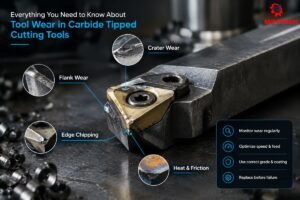
Everything You Need to Know About Tool Wear in Carbide Tipped Cutting Tools