
- May 19, 2026
- by Almifthaah
Common Problems with Shim Stock and How to Avoid Them
Table of Contents
ToggleKey Takeaways
- If the wrong shim isn’t used, it can ruin the alignment of the machine.
- The accuracy of shims is decreased by moisture and dust.
- Before installing, it is essential to check the thickness.
- Shim stock can be bent or scratched by poor handling.
Industrial machines rely on accurate alignment, smooth fitting, and proper spacing. Any problem with shim stock can result in vibration, machine wear, or poor performance. Hence, the knowledge of common shim stock problems will assist the industries to minimize downtimes and enhance accuracy. Reliable shim stock is important for long-term machine performance, and companies such as Almifthaah prioritize quality materials.
Why do shim stock problems matter?
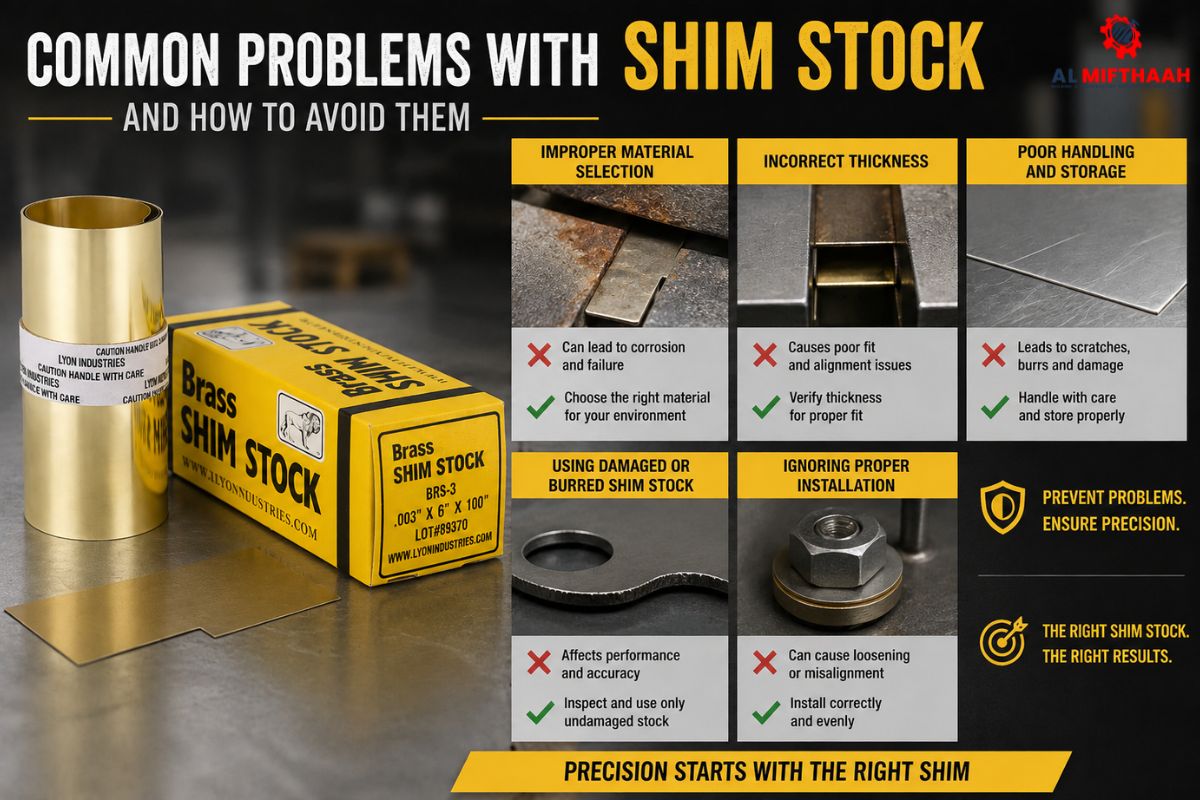
Shim stock is used broadly for the following purposes: working in industrial machines, maintenance, and precision fitting. But many users encounter difficulties due to selecting the material that is not suitable, failing to pay attention to the thickness accuracy, or improper storage of the shim sheet. Initially, these errors will seem insignificant, but they can impact machine alignment and production quality.
Technicians rely on correct measurements in many factories prior to installation. Hence, many businesses opt for experienced shim stock suppliers in Dubai to obtain the right and durable products for industrial applications.
A few common effects of improper use of shim stock are the following:
- Machine vibration
- Uneven alignment
- Quick wear of machine parts
- Increased maintenance costs
- Lower operational efficiency
Therefore, it is very important to select the proper shim stock material and handle it with care.
What causes wrong shim selection?
The most common issues are the type and thickness of the shim. Various machines have various types of shims. For example, a stainless steel shim is suitable for use in high-temperature situations, but a brass shim might be appropriate in lighter applications.
Many users choose to click on whatever they can find without making careful consideration of the machine requirements. This can cause the shim to bend, rust, or break when stressed.
To avoid this issue:
- Check machine load capacity.
- Confirm operating temperature
- Check the thickness prior to installation.
- When necessary, use corrosion-resistant materials.
- Follow manufacturer recommendations.
Additionally, competent technicians tend to take on trusted precision instruments suppliers in Dubai to be able to get accurate measurement support when fitting.
How moisture and dirt affect shim stock?
However, moisture, dust, or oil can easily accumulate on shim stock if it is not stored properly. This can be a problem but could lead to uneven spacing and misalignment.
For example, dust particles could stay in between the shim and the machine surface, causing the fitting to be slightly uneven. This can build up vibrations and cause harm to any nearby components over time.
These are simple steps to avoiding contamination:
| Problem | Prevention Method |
| Rust formation | Store in dry areas |
| Dust accumulation | Keep inside sealed covers |
| Oil contamination | Clean before installation |
| Surface scratches | Separate sheets carefully |
Moreover, by frequently cleaning, the thickness accuracy can be kept high and the machine reliability can be enhanced.
Why does thickness accuracy become a problem?
Another important problem in industrial applications is the variation of thickness. Machine alignment can fail altogether if the thickness of the shim is not correct. Even such a small variance can cause operational issues with high-precision equipment.
This is generally a problem that occurs when the user buys inferior products or when the measurement of the shim is not done accurately before installation.
Most machine measuring tools dealers in Dubai sell the type of tools that are used by professionals working with heavy industrial systems to ensure that the shim dimensions are verified and correct before they are used.
A few signs of thickness-related problems include:
- Uneven machine movement
- Noise during operation
- Excessive friction
- Improper shaft alignment
Shim thickness should always be tested prior to installation.
Can poor handling damage shim stock?
Yes, one of the most ignored problems is improper handling. Thin and delicate material stock of shims. Careless folding, bending, or dragging by workers may cause it to lose its flatness.
For example, pressure imbalance may occur in the machine assembly due to bending a shim. Moreover, damaged edges can have an impact on fitting accuracy when maintenance activities are carried out.
To avoid handling damage:
- Handle with gloves.
- Avoid folding thin shim sheets
- Cut using proper tools
- Do not fold sheets when storing.
- Do mark the various thicknesses with different labels.
A lot of maintenance crews opt to buy accessories for handling and fitting from trustworthy industrial equipment dealers in Dubai to decrease installation errors.
How to store shim stock properly?
Shim stock will have a longer life and be more accurate in use when stored properly. Unfortunately, many workshops continue to store shim sheets in the open, where they readily absorb the moisture and dust from the environment.
The following are elements of proper storage:
- Dry storage cabinets
- Protective covers
- Separate thickness labeling
- Flat horizontal placement
- Regular inspection checks
Furthermore, the workers should not combine various thicknesses of shims. It is essential to keep stainless steel, brass, and plastic shims apart so as to prevent confusion in emergencies.
Quality is often a focus in industrial practices at Almifthaah, particularly when it comes to storage methods; even good quality shim stock can fail if not handled properly.
Simple tips to avoid common errors
With proper inspection and handling practices, most shim stock problems are avoidable if they are done routinely. Minor enhancements at the installation phase can help to reduce repair expenses and downtime.
These are handy tips to prevent common errors:
- Always check the surface prior to installation.
- Use calibrated tools to measure thickness.
- Replace damaged or rusted shims immediately.
- Keep unused sheets in a secure place.
- Select appropriate materials for specific uses.
- Provide training on handling procedures.
Therefore, a good source of reliable tools also enhances fitting accuracy. Most industries like to work with a trusted Saif Precision tools supplier in UAE to get the correct maintenance support for industry.
Almifthaah is also familiar with the importance of quality installation practices. Moreover, it is always better to have proper measuring methods and skilled technicians.
Wrapping up
Machine alignment and performance are important functions of shim stock. Issues such as rust, wrong thickness, and handling can impact efficiency. Almifthaah is known for providing lasting solutions to industries, and companies seeking trustworthy shim stock suppliers in Dubai must never compromise on quality and performance.
Frequently asked questions
1. What is the main purpose of shim stock?
Shim stock is used to ensure proper spacing and machine alignment in assembly processes within industry.
2. Can rust affect shim stock performance?
Yes, rust affects surface quality and could affect the accuracy of the fits inside machines.
3. Why is shim thickness important?
Appropriate thickness helps maintain alignment, facilitate smooth running, and help to minimize vibration in the machine.

How Long Do Mounted Points Last and When Should You Replace Them?

Everything You Need to Know About Tool Wear in Carbide Tipped Cutting Tools