

- August 13, 2026
- by Almifthaah
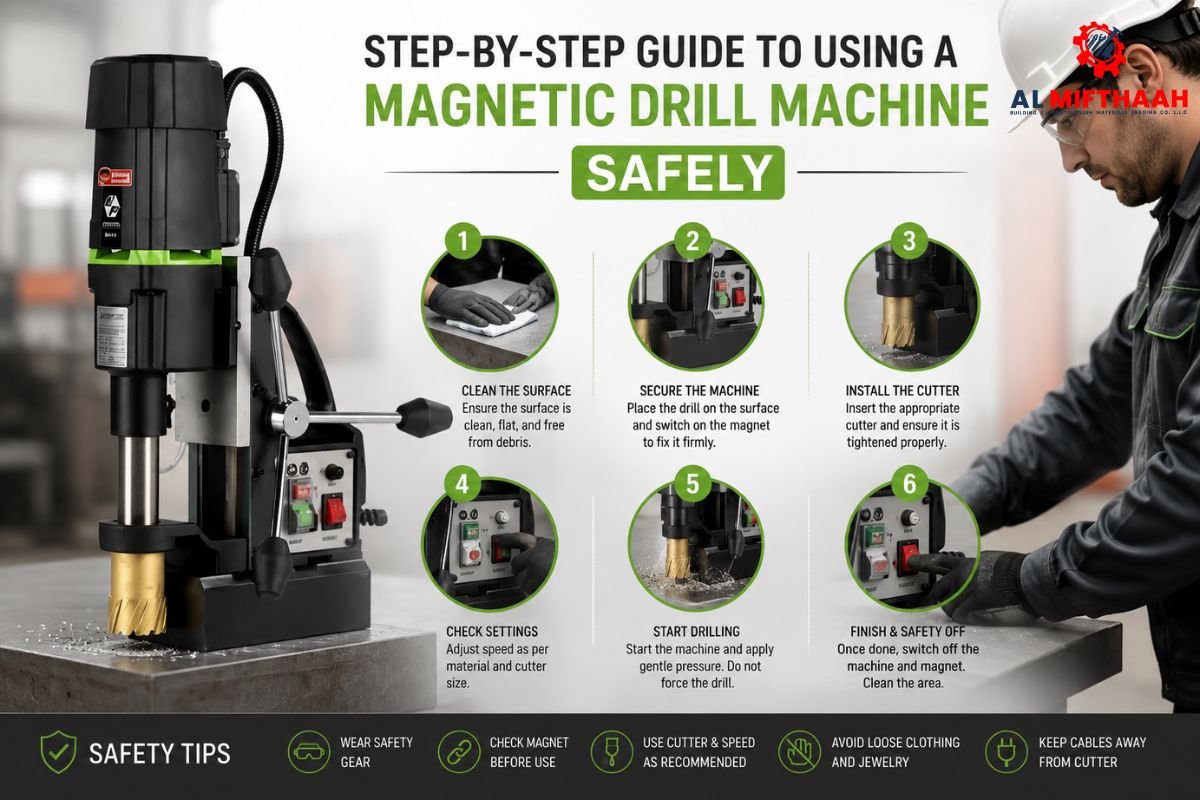
Step-by-Step Guide to Using a Magnetic Drill Machine Safely
Table of Contents
ToggleKey Takeaways
- The efficiency of a magnetic drill increases when the base surface where it attaches is entirely smooth and clean.
- Suitable preparation of the surface gives more stability and decreases the chances of dangerous incidents during drilling.
- Trained distributors of drilling instruments in the UAE help companies when confronted with unpleasant breakdowns.
A magnetic drilling machine clamps to a steel surface with an electromagnetic base, then drills through it using a broach cutter or twist bit. It doesn’t need a table or a vice. It goes to work.
That’s the reason you see them on structural steel jobs, pipeline fabrication, and shipbuilding. You’re drilling into beams and flanges that can’t be carried to a bench. The magnet does what a vice would do in a shop, which is a neat solution, but it also means the whole operation rests on that magnetic bond holding through vibration and heat.
Anyone who’s worked fabrication in the Gulf has probably run into the search for magnetic drilling machine dealers in Dubai when a job needs overhead or vertical drilling that a handheld drill can’t handle safely. It’s a common enough problem that the demand makes sense.
Before you switch it on: pre-use checks
Rushing this part is where most problems start.
- Surface condition- The magnet needs flat, bare steel contact. Paint, rust, or even a thin film of grease can cut holding force in half, which surprises people who assume the magnet will grip regardless. Wire-brush or grind the area first if it’s not clean.
- Material thickness- Most bases need around 6mm of steel to reach full holding power. Go thinner, and the magnetic circuit weakens, and the drill can lift off partway through the cut.
- Stability check- Switch the magnet on and physically try to rock the base before you drill. It shouldn’t move. If it does, stop and look at the surface again.
- Coolant and pilot pin- Broaching cutters need cutting fluid, or the teeth burn out fast. Set the pilot pin properly too. It centers the cutter and pushes the slug out once you’re through.
Step-by-step operating process
- Punch a center mark so the pilot pin has somewhere to sit.
- Position the machine over the mark, base fully seated on clean steel.
- Engage the magnet, then check it physically. Don’t trust the indicator light on its own.
- Attach a safety strap or chain for overhead or vertical work.
- Start the coolant, then feed the cutter in slowly. Forcing the feed rate causes chatter and wears the cutter out early.
- Ease off as you break through so the slug doesn’t jam and the cutter doesn’t grab.
- Switch off the motor, wait for it to fully stop, and only then disengage the magnet before moving the machine.
Moreover, that last step is the one people skip trying to save thirty seconds, and it’s how fingers get caught.
Choosing the right cutter for the job
Twist bits are fine under about 13mm. Past that, on structural steel, a broaching cutter is the better tool. It only removes a ring of material instead of the full hole volume, which means less torque, less heat, and a faster cut.
The Supercut Rotabor Cutter shows up a lot on Gulf fabrication sites because it holds its edge through repeated use on mild and stainless steel without needing constant resharpening. For crews drilling multiple holes a day, that’s fewer stoppages, which adds up over a shift.
| Cutter Type | Best For | Typical Hole Range | Cutting Speed |
| Twist Drill Bit | Thin plate, occasional holes | Up to 13mm | Slower on thick steel |
| HSS Broaching Cutter | General fabrication | 12–50mm | Moderate |
| TCT Broaching Cutter | Stainless, hardened steel | 12–50mm | Faster, longer edge life |
| SUPERCUT ROTABOR CUTTER | High-volume structural steel work | 12–100mm | Fast, consistent finish |
Use a standard HSS cutter on stainless, and it’ll dull within a handful of holes. A TCT cutter or the Supercut Rotabor Cutter gets through the same job without you swapping tools every twenty minutes.
Common mistakes that cause accidents
- Drilling on painted or rusty steel and assuming the magnet will grip anyway.
- Skipping the safety chain overhead because the magnet “feels solid.”
- Overfeeding the cutter until it binds, stalls the motor, or snaps a tooth.
- Running dry with no coolant, which shortens cutter life and can warp the hole.
- Repositioning while the magnet is still partly engaged, which is how fingers or clothing get caught.
These aren’t rare failures. They’re the same five mistakes on repeat, usually from people who’ve done the job hundreds of times and stopped bothering with the checklist. The best drilling machine suppliers in Dubai will give you the right advice.
Maintenance habits that extend machine life
Clean the magnetic base at the end of every shift. Metal shavings stuck to the contact surface cut holding power just as much as rust does. If it’s a brush-type motor, check the carbon brushes now and then; worn brushes lose power well before they fail outright.
Therefore, store cutters dry and lightly oiled. Leave one wet with coolant residue in Gulf humidity and the cutting edge will corrode within days, which shortens its working life noticeably.
Expert insights from the workshop floor
Ask anyone who’s run these machines for years, and they’ll tell you the same thing: the magnet is only as good as the surface underneath it. A brand-new machine on a dirty plate will lose to a ten-year-old machine on a clean one.
Crews buying from established drilling tools suppliers in UAE tend to see less downtime, mostly because they’re getting genuine cutters and parts instead of substitutes that don’t hold tolerance. On a tight deadline, that difference shows up fast.
If you’re comparing magnetic drilling machine dealers in Dubai, ask about after-sales support directly. Spare magnet coils, brush replacements, cutter stock. Over the life of a machine, that matters more than the price tag on day one.
Conclusion
Once you respect the fundamentals, a magnetic drill isn’t complicated. Clean surface, right cutter, steady feed, safety strap overhead. Most accidents trace back to a skipped basic, not a broken machine. Get the process right early, and you save both time and injuries later.
If you’re weighing up suppliers, Almifthaah works with fabrication and construction teams across the UAE to match the machine and cutter, including the Supercut Rotabor Cutter, to the actual job rather than a generic spec sheet.
Frequently asked questions
Drilling precise holes into steel on-site, without a drill press or vice, by clamping magnetically to the material.
Around 6mm minimum for full holding force. Go thinner and the magnetic circuit weakens.
Past 13mm on structural steel, yes. It removes less material, runs cooler, and cuts faster with less torque strain.
Usually surface contamination. Rust, paint, or oil weaken the magnetic bond, so clean the contact area before every use.
It’s essential overhead or on vertical surfaces, where a magnet failure means the machine falls. Worth doing on horizontal jobs too.
Continuously through the cut. Dry cutting overheats the edge and shortens cutter life fast, especially on thicker material.
It keeps a sharp edge through extended use on mild and stainless steel, which means fewer tool changes on high-volume jobs.
Look for genuine parts, real after-sales support, and stock on spare cutters and magnet components.
Check their technical support, warranty terms, and whether they stock parts specific to your machine model.
Yes, with the right cutter. TCT or premium broaching cutters like the Supercut Rotabor Cutter hold up better than standard HSS.

How Long Do Mounted Points Last and When Should You Replace Them?

Everything You Need to Know About Tool Wear in Carbide Tipped Cutting Tools