

- October 26, 2026
- by Almifthaah
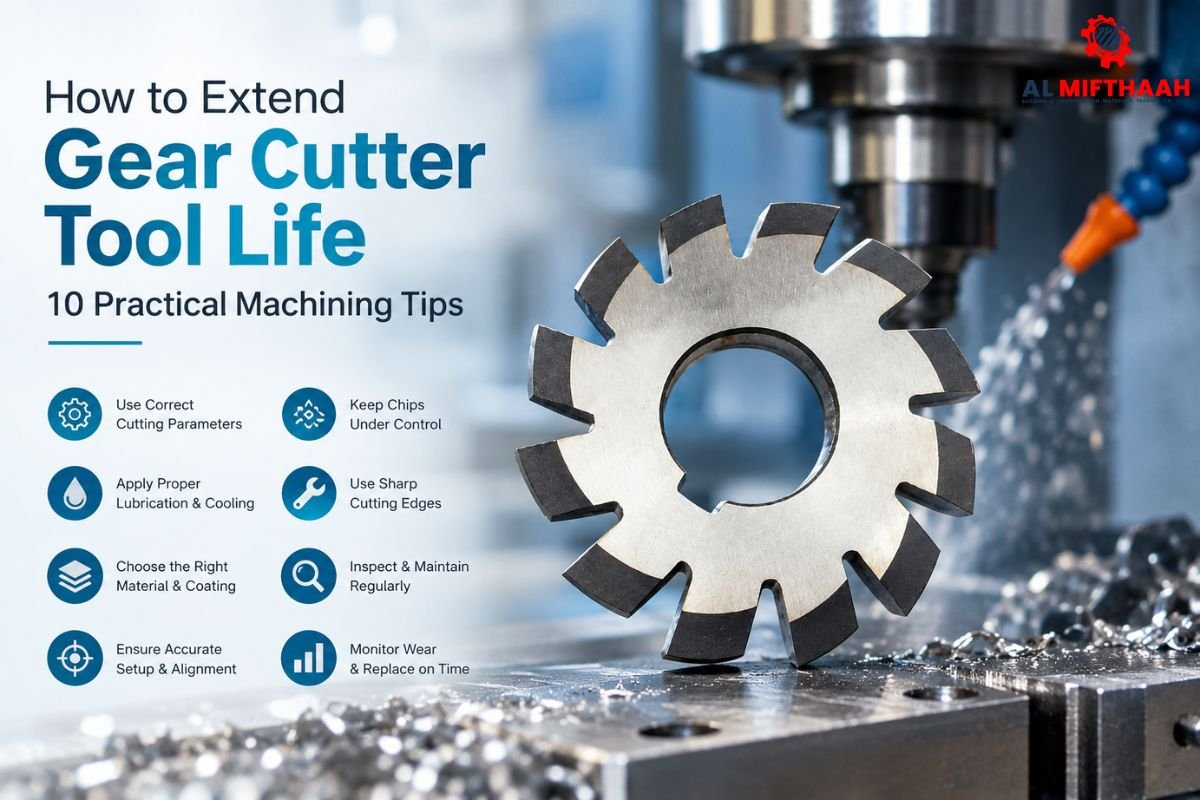
How to Extend Gear Cutter Tool Life: 10 Practical Machining Tips
Gear cutter tool life is dependent on five main factors: the matching of cutter material to the workpiece, running correct cutting speeds and feeds, maintaining the cutter and workpiece setup in a rigid manner, running the cutter with a coolant, and sharpening the cutter prior to the occurrence of damage. Maintaining the machine in good condition and making log records of tool performance is also beneficial. These habits lead to less downtime, fewer replacements, and no variation in the quality of the gears in each run.
Table of Contents
ToggleKey takeaways
- Know when and what tools to use: Select the appropriate material and finish of the workpiece for the tool.
- Set heat and chip control: Ensure speeds, feeds, and coolant flow are set to help protect cutting edges.
- Maintain a stable setup: Avoid wear from rigid fixtures, correct alignment, and healthy machines.
- Measure and adjust: Monitor tool life data to optimize the process and supplier.
Choose the right cutter material and coating
The first step to tool life is the right tool. The cutter will wear out rapidly when cutting hardened alloys or stainless steel if it is designed for mild steel. Check material, hardness, and coating prior to purchase for your piece.
- High-speed steel (HSS): Used for general-purpose and lower production volumes.
- Cobalt alloyed HSS: More heat resistant in harder materials.
- Coated cutters: These have coatings like TiN or TiAlN, which help to minimize friction and withstand higher temperatures.
Therefore, inquire about the material grade and coating data sheet when you are sourcing from a gear cutters dealers in the Dubai network. Your good suppliers can explain to you which one is good for your application.
Match cutting speed and feed to the workpiece
The most common factor in premature wear is running too fast. Over-speeding creates heat and softens the cutting edge. Too light a feed will result in rubbing rather than clean cutting and will reduce life.
Use the manufacturer’s suggested values as a starting point. Then make very small adjustments in trial cuts. Reducing speed by 10 to 15 percent during testing is a practical way to find a stable window. Document successes to provide a foundation for future job activities.
Use rigid setups to reduce vibration
A silent tool killer is vibration (chatter). It results in small chips on the cutting edges, uneven wear, and inadequate surface finish of the gears. It is usually caused by a loose workholding fixture, a long tool overhang, or worn spindle bearings.
Additionally, use a short arbor as long as possible; ensure all clamping points are securely tightened. When you are using a reputable Saif Precision tools supplier in UAE, inquire about the options of rigid holders that are available and fit your machine size. Stable setups allow the cutter to work without conflict.
Apply coolant consistently
Coolants are used to cool the cutting area, but they do more. Flushes chips away, lubricates the edge, and helps to maintain a steady temperature. Thermal cracking is caused by inconsistent coolant flow, particularly in interrupted cuts.
Ensure that the nozzle is in the correct direction to ensure the coolant is directed towards the cutting area and not the wrong side of the cutting tool. Use a refractometer to check concentrations and change coolant regularly. Clean filters regularly. Many of the cutting and milling tools Dubai shops are seeing significant life improvements just by making coolant delivery improvements.
Sharpen before wear becomes damage
Late sharpening is more expensive than on-time sharpening. As chipping and heavy flank wear occur, regrinding will take off more material, and the original profile accuracy of the cutter can be lost.
Determine the resharpening period depending on parts or cutting hours, and modify it with actual wear data. Check cutting edges under magnification between cuts. Use a reliable gear-cutters supplier in Dubai that can offer the regrinding service without altering the original geometry.
Control chip load and chip evacuation
Chip load is the thickness of material removed by each tooth in one revolution. The thicker the chip, the greater the cutting force will be. If they are too thin, the tooth rubs and produces heat. They both reduce tool life.
Dulling of the edge is caused by recutting caused by poor evacuation of chips. Make sure that chips pass easily through the gullets. If packing chips, adjust feed, coolant pressure, or direction of cut as needed. Moreover, the ideal cutting and milling tool setup will always make it easy for the chips to get out of the area of the tool.
Verify hob and cutter alignment
If the cutter is misaligned, one side of it bears more weight than the other. This causes uneven wear, cracked teeth, and gears that don’t pass inspection. Don’t just check for alignment after a crash.
Check runout and axis alignment with dial indicators or the machine’s measuring devices. Make a re-check whenever fixtures are changed or after maintenance. Over time, small adjustments at set-up can be significant in terms of tool expenses.
Maintain machine condition and backlash
The tool life is directly related to machine condition. Excessive backlash, worn ways, and loose gibs all cause inconsistent cutting motion. No matter how good the cutter is, it will wear out quickly when it is used in a poor-geometry machine.
Regularly check spindle runout, lubrication, and axis backlash. Change worn bearings before they wear out. Good machines also minimize scrap and help to preserve good margins. Many outlets spend money on the best machine tools accessories in Dubai, like precision measuring kits and chip management apparatus to help with this routine.
Store and handle cutters properly
Cutter performance can be lost before it hits the machine when it is dropped, banged against other tools, stored in humid air, etc. Damage to the edge due to handling is a frequent and preventable cause of early failure.
Separate cutters with protective cases or racks. Use a light rust-preventive coating during storage, particularly in humid climates (Gulf Regions). Wear gloves while handling, and visually examine each cutter prior to installation. Each tool’s specification is also clearly labelled, preventing mix-ups. Reliable gear cutter suppliers in Dubai will consult you about the packaging and storage for your conditions.
Track tool life with simple records
What you can’t measure, you can’t improve. The recording of tool life data will reveal the best-performing cutters, suppliers with consistent quality, and areas for improvement.
Maintain a simple log including the cutter ID, date installed, parts or hours completed, removal reason and any wear notes. Patterns will develop over time or within a few months. Provide the data to your gear cutter suppliers in Dubai, partner, and your Saif Precision tools supplier in the UAE to enable well-informed purchasing.
Quick reference: wear signs and fixes
| Wear Sign | Likely Cause | Practical Fix |
| Chipping on cutting edges | Vibration or excessive feed | Improve rigidity, reduce feed |
| Rapid flank wear | Cutting speed too high | Lower speed by 10 to 15 percent |
| Discoloration or blue edges | Heat buildup | Improve coolant flow and check concentration |
| Uneven tooth wear | Misalignment | Recheck runout and setup alignment |
| Built-up edge | Chip packing or wrong coating | Improve chip evacuation, review coating |
| Poor gear surface finish | Dull edges or machine backlash | Resharpen on schedule, service machine |
Wrapping up
Proper selection of the gear cutter tools, proper machine operation, and regular maintenance are the key to prolonging the life of the gear cutter. Tiny enhancements in speed, coolant, alignment, and storage add up to big savings in a year. When looking for new cutters or creating a regrind plan, it’s helpful to work with experienced gear cutters suppliers in Dubai to ensure that you have the right equipment and guidance. Almifthaah is specifically designed to provide benefits to machining professionals looking for extended tool life and improved performance.
Frequently asked questions
The re-sharpening process is dependent on the material, cutting parameters, and parts produced. Most shops use intervals depending on the number of parts produced and then fine-tune with data from the edges of the parts.
Yes. Constant coolant helps to keep temperatures low, clear chips, and cool cutting surfaces. A frequent cause of premature tool failure in the manufacture of gears is poor flow or wrong concentration.
The most common cause is the wrong cutting speed. Excessive speed produces heat, which causes a loss of edge and fast flank wear and leads to a shorter tool life.
Yes. Humidity may lead to rust, and careless handling may lead to chipping of the edges. Cutters remain ready for ideal, reliable cuts when stored in protective cases.

How to Identify the Correct Gear Cutter When the Markings Are Missing

Carbide Tool Maintenance Tips Every Machinist Should Know