
- May 23, 2026
- by Almifthaah
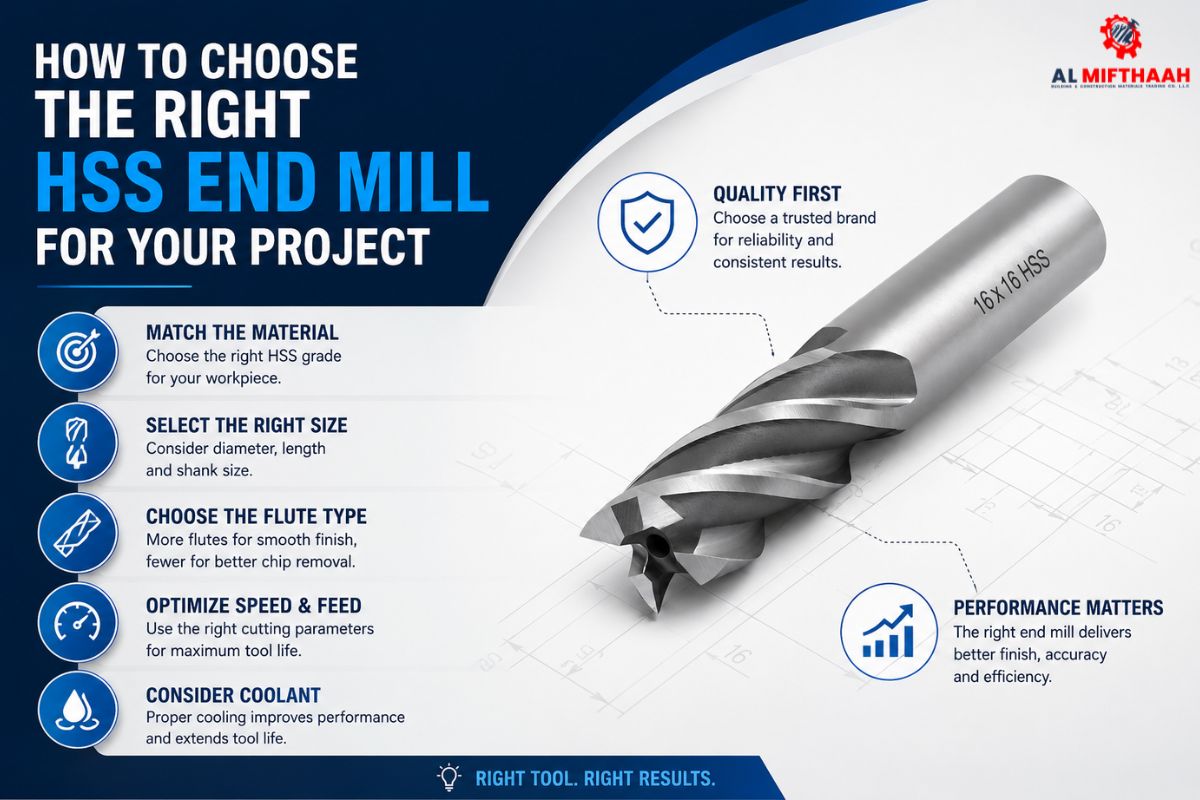
How to Choose the Right HSS End Mill for Your Project
Table of Contents
ToggleKey Takeaways
- Always match the end mill to the material to be milled.
- Flute design affects chip removal and finish quality.
- Tool coating makes for a longer-lasting and heat-resistant tool.
- If the cutting speed is not correct, it will bring about fast tool wear and tear.
The proper HSS end mill will increase cutting speed, surface finish, and tool life. A wrong tool can damage material and increase production cost. Therefore, to get smooth and accurate machining results, it is crucial to understand the material type, flute design, coating, and cutting application.
Why does choosing the right end mill matter?
A lot of the machining issues occur because of the choice of an inappropriate cutting tool. The HSS end mill could seem quite straightforward, but each is configured differently. Some tools cut faster, and others get the finishing better.
For example, an aluminum cutting workshop requires other tools than a stainless steel one. So, choosing the right cutter can help to optimize efficiency and minimize tool wear. Companies like Almifthaah
To be aware of the importance of selecting appropriate tools for industrial work.
Always consider:
- Material hardness
- Cutting speed
- Required finish quality
- Machine capability
- Heat resistance
An efficient tool selection also ensures reduced vibration and increased safety in the machining process.
What is an HSS end mill?
HSS is an abbreviation for high-speed steel. They are affordable and durable and can be used in a variety of cutting applications, making them widely used. Besides, they can be used for light- and medium-duty machining operations.
These are some of the most common uses of HSS tools:
- Slot milling
- Side milling
- Profile cutting
- General-purpose machining
Compared with carbide end mills, HSS end mills are more flexible and less prone to breaking when faced with sudden pressure. So many beginners and workshops still use them as their daily tools.
When it comes to finding cutting and milling tools that are high in quality and can be relied upon by businesses, many will be interested in using the services of a company that provides them with quality cutting and milling tools Dubai for industrial cutting and milling.
Which material are you cutting?
The first step in the purchase of any end mill is to learn about the material that you will be using. There is a difference in cutting conditions for different metals. However, the tool geometry should correspond to that of the material to be worked.
1. For Aluminum
Work with tools that have fewer flutes since they remove chips faster. This will prevent some sticking and overheating.
2. For Steel
Select more durable and more robust flute designs. However, when cutting steel, it generates more heat than other materials, making durability a factor.
3. For Soft Materials
Sharp cutting edges are better as they minimize friction and surface finish.
In the case of softer non-ferrous materials where higher chip removal rates are needed, many workshops compare the HSS tools with Single Flute Carbide Endmill UAE options.
How does flute design affect performance?
The grooves of the cutter that cut off the chips during the cutting process are called flutes. The right flute design can impact cutting performance.
| Flute Type | Best Use | Main Benefit |
| 2-Flute | Aluminum | Better chip removal |
| 4-Flute | Steel | Smooth finishing |
| Multi-Flute | Hard materials | Higher cutting stability |
Flute count is inversely proportional to chip removal; increasing count provides better surface finish. On soft material, however, an excessive number of flutes can lead to chip build-up.
Additionally, the length of the flute is important as well. Longer flutes allow for deeper cuts but can cause instability if not used properly.
Why tool size and coating matter?
The diameter of the tool relates to cutting depth, accuracy, and the load the machine will carry. Smaller tools will provide detailed machining, and larger tools will remove material quicker.
Coating type should also be considered since coatings enhance heat resistance and tool life.
Common coatings include:
- TiN coating for general machining
- At high heat, TiAlN coating is used for high-heat applications.
- Bright finish for aluminum cutting.
Furthermore, good coating results in wear reduction and increased cutting speed. Thus coated HSS tools tend to have a longer life. The industrial buyers are also in the habit of reaching out to milling cutter dealers in Dubai to get a comparison between coated and non-coated cutters based on the project requirements.
What should you check before buying?
Many people focus only on price. However, quality and compatibility matter more in long-term machining performance.
Here are a few things to take into consideration before buying an HSS end mill:
- Machine spindle compatibility
- Required RPM range
- Tool holding system
- Cutting depth requirement
- Coolant availability
- Surface finish expectation
Experienced suppliers are also useful to purchase from, as they possess an understanding of the industrial application of the machining. Companies such as Almifthaah, support industries through providing appropriate tooling advice on various machining operations.
Some manufacturers also choose to collaborate with a Saif Precision tools supplier in UAE, as they are capable of delivering a wide range of industrial tools and providing technical assistance and support.
Common mistakes to avoid
A well-made end mill can be ruined if it is not used properly. Thus, it helps to avoid some fundamental errors when machining, improving the results.
- Using Wrong Speed Settings
Running at too high of a speed will generate heat and wear the cutting edges down too rapidly.
- Ignoring Chip Removal
The poor evacuation of the chips increases friction and decreases the tool life.
- Choosing Incorrect Flute Count
Chips can be blocked if too many flutes are used on soft materials.
- Using Damaged Tools
Rough surfaces result from worn tools and from stress on the machine.
Moreover, never use tools without conducting a pre-use inspection. Machining accuracy can be greatly impacted by small edge damage.
Quick comparison table
| Feature | HSS End Mill | Carbide End Mill |
| Cost | Lower | Higher |
| Flexibility | Better | Less flexible |
| Heat Resistance | Moderate | Excellent |
| Breakage Risk | Lower | Higher |
| Cutting Speed | Medium | High |
For general machining and cost-effective operations, HSS tools are ideal. Carbide tools are more suitable for high-speed industrial production, however.
The majority of industrial buyers who are looking for best milling tools dealers UAE compare both of them before they choose the appropriate milling tool for long-term production work.
Bottom line
It is necessary to select the right HSS end mill to effectively perform quality, high-speed, and long-life production. As a result, be sure to always take into account material type, flute design, coating, and machine compatibility when making a purchase.
Moreover, industries can choose reliable tools to achieve higher machining performance by selecting reliable supplies such as Almifthaah. A good HSS endmill supplier in Dubai is one that provides quality, technical support, and value to the business.
Frequently asked questions
1. Which HSS end mill works best for aluminum?
Two-flute HSS end mills are best, as they chip quickly and don’t tend to clog.
2. Can HSS end mills cut stainless steel?
Under the right conditions of speed and fluid, coated HSS end mills can cut stainless steel.
3. Why does flute count matter in machining?
Flute count is used to adjust the removal of chips, stability of cut, and surface finish during the milling operation.

Common Magnetic Drill Machine Problems and Solutions

How Does a Gear Cutter Work? Understanding the Gear Cutting Process

