

- September 29, 2026
- by Almifthaah
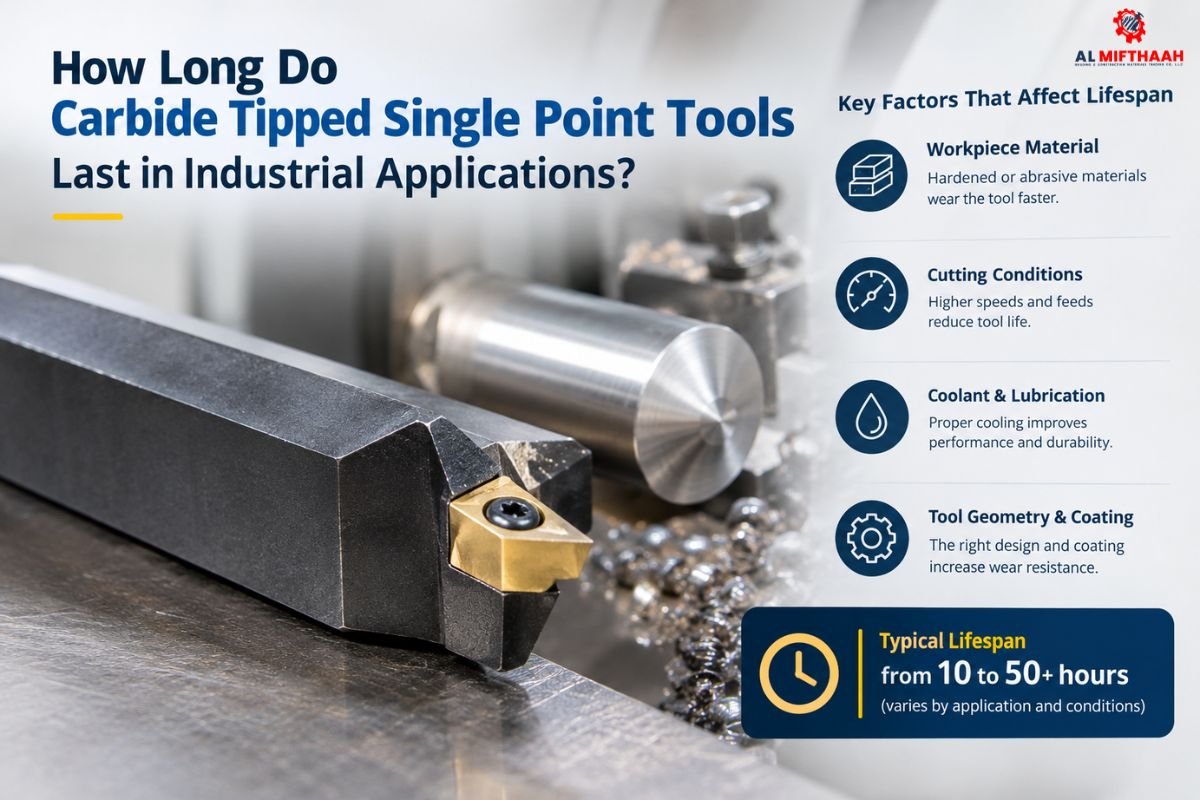
How Long Do Carbide Tipped Single Point Tools Last in Industrial Applications?
There is no common figure of hours or components applicable to each carbide pointing tool. Tool life indicates the time of cutting till the edge gets worn out beyond the point defined by you. The mentioned period is dependent on material characteristics, speed, feed, cutting depth, coolant, machine rigidity, and tool maintenance. The life span of the tool working on free-cutting steel will be much longer under stable conditions than one that deals with difficult and abrasive or broken cuts.
This guide is meant for machinists, maintenance leaders, and clients who want to acquire an effective way of tool life assessment. If you happen to talk with a supplier of Carbide Tipped Single Point Tools in Dubai, it will assist you in asking more reasonable questions related to the grade and geometry of the tool and its purpose.
Table of Contents
ToggleKey takeaways
- Tool life is not constant. It varies with the material, speed, feed, depth of cut, and the setup.
- The single most influential factor is generally cutting speed, where even a small increase can reduce life significantly.
- A worn edge will ruin the finish and increase cutting force well before it breaks, so catch it early.
- Regrind carefully, keep records, and rotate tools before they start making scrap.
What are carbide tipped single point tools?
A carbide tipped single point tool has one cutting edge. A small piece of cemented carbide is brazed onto a steel shank, and the tool goes on a lathe or similar machine for turning, facing, boring, threading or grooving.
The carbide handles the heat and wear at the edge. The steel shank supplies strength and keeps the price below that of a solid carbide tool. The tip can usually be reground more than once.
However, Buyers looking for a carbide tip single point tool Dubai workshops can usually check how the tip is attached, which carbide grade it is and how the edge is ground. Those details often matter more to tool life than the name stamped on the shank.
Typical lifespan in industrial use
In testing, tool life is the cutting time until flank wear (the worn strip on the side of the tool) reaches a set width. For carbide, about 0.3 to 0.4 mm is a common reference. Real shops set their own limit based on the finish and tolerance the part needs.
Published turning studies on coated carbide in steel and stainless steel agree on one point. Raise the cutting speed and the time to the wear limit drops, sometimes by a lot. That is why two shops using the same tool can report very different results.
So skip the hunt for a universal figure and measure your own. Count parts per edge, or minutes of cutting per regrind, for each job. If you buy a tool with carbide tip single Dubai stockists supply, log those numbers over the first few batches. They become your benchmark, and when they change, something in the process has changed too.
Factors that affect tool life
Several things act on the edge at once. These matter most day to day.
- Workpiece material
Hard, abrasive or work-hardening materials wear the edge faster. Stainless steel, cast iron with a hard skin and forgings with scale cause the most trouble. Free-cutting materials are much kinder.
- Speed, feed and depth of cut
Speed drives heat, and heat drives wear. Feed and depth of cut set the load on the tip. A feed that is too light causes rubbing, and a cut that is too heavy can chip the carbide. The right balance depends on the material and the grade.
- Machine and setup rigidity
Long overhang, a loose tool post or a tired spindle brings vibration. Chatter is one of the quickest ways to chip a carbide edge, even when the speeds and feeds look fine on paper.
- Coolant and heat control
Steady coolant flow keeps the temperature down and clears chips. If the flow is interrupted or badly aimed, the edge heats and cools over and over and can develop thermal cracks.
- Tip grade and geometry
Harder grades resist wear but are more brittle. Tougher grades handle shock but wear sooner. Rake and relief angles, nose radius and edge preparation should suit the job. Some shops still prefer HSS welded tool bits for shock-heavy roughing, and a HSS Welded Tool Bit supplier in Dubai can help you compare the two for a specific application.
Signs of wear to watch for
Wear rarely arrives without warning. Operators who spot the early signs can act before a bad edge ruins parts.
- The surface finish turns rough or shows a shiny, smeared band.
- Part diameters drift and the operator keeps compensating.
- The cutting noise changes, or chatter starts where there was none.
- Spindle load or cutting force rises for the same cut.
- Chips change colour or shape, or a burr appears at the edge of the cut.
Furthermore, under a loupe you may see a widening wear land on the flank, a crater on the top face, small chips along the edge, or metal welded onto the tip (a built-up edge). Corner wear deserves attention too, because it changes part size directly. If a tool with carbide tip single Dubai machinists have been running starts leaving a bright smear on the work, inspect it straight away instead of finishing the batch.
Maintenance tips that extend tool life
Good habits often add more life than a change of grade.
- Inspect the edge at every tool change. A quick look with a loupe takes seconds and catches chipping early.
- Keep the overhang short and extend the tool only as far as the job needs.
- Clean the tool seat. Chips or dirt under the shank tilt the tool and change the cutting angles.
- Keep coolant consistent, aimed at the cutting zone, with the concentration in range.
- Store tools apart from each other. Loose tools knocking together chip carbide tips before they reach the machine.
Regrinding needs care. Carbide is normally ground with diamond wheels, and too much heat or pressure can leave tiny cracks that show up later as sudden chipping. If you are unsure which wheel or angles suit a particular grade, talk to a Saif Precision tools supplier in UAE before you regrind. The wrong wheel can crack the tip.
When to regrind or replace?
Set a wear limit for each job and stick to it. Regrind or replace the tool when any of these happen:
- Flank wear reaches your agreed limit.
- The finish or size can no longer stay within tolerance.
- The tip is chipped, cracked or loose in its seat.
- Cutting forces or spindle load keep climbing.
Regrinding is usually the better choice while enough carbide remains and the braze is sound. Once the tip has been ground back too far, or the joint is damaged, replace it. Waiting for a tool to fail is rarely cheaper, because a broken tip can score the workpiece, damage the holder and stop the machine.
Moreover, replacement timing for a carbide tip single point tool Dubai plants use daily should follow your recorded data. Regular jobs can be planned around scheduled changes, which avoids mid-batch surprises.
Carbide tipped vs HSS welded tool bits
Both have a place in an industrial workshop. Carbide tips keep their hardness at higher temperatures, so they suit faster cutting and abrasive materials. High-speed steel is tougher and easier to sharpen, so it copes better with shock, vibration and irregular cuts.
An HSS welded tool bit joins an HSS cutting portion to a steel shank, which keeps the cost down and leaves an edge you can sharpen. Many shops keep both types on the rack and choose by job. Buying from an HSS Welded Tool Bit supplier in Dubai that also carries carbide tipped ranges saves you from juggling several vendors.
Choosing the right supplier
Tool life starts with the right tool for the job. A good supplier asks about your material, machine, cutting conditions and finish requirements before recommending a grade or geometry.
Almifthaah, which trades as Saif Precision Tools, supplies cutting and milling tools for industrial use in the UAE, including HSS endmills, carbide drill bits and cobalt cutters. Its team works with these tool materials regularly, so it can advise on which one suits your application. When you contact any Carbide Tipped Single Point Tools supplier in Dubai, ask these questions:
- Which carbide grade suits my workpiece material?
- What shank size and tip shape fit my tool post?
- What speed and feed ranges do you suggest as a starting point?
- What guidance can you give?
Bottom line
Carbide tipped single point tools last as long as the conditions let them. Pick the grade and geometry for the job, run sensible speeds and feeds, keep the setup rigid, check edges often, and regrind with care. Record your results, and you will soon know what to expect from each job.
If you need help choosing tools for your turning work, talk to Almifthaah, provider of Saif Precision Tools. As a Carbide Tipped Single Point Tools supplier in Dubai, the team can help match the right tool to your material and machine. Send your application details and ask for a quote.
Frequently asked questions
There is no fixed figure. Life depends on the material, speed, feed, depth of cut, coolant and setup, so track cutting time or parts per edge in your own shop.
Many references use flank wear of about 0.3 to 0.4 mm as a guide. Your part tolerance and finish requirements should set the final limit.
Yes, usually several times, as long as enough carbide remains and the braze is sound. Use a suitable diamond wheel and avoid overheating the tip.
Common causes are vibration, interrupted cuts, thermal shock, too much overhang, or a grade that is too hard for the job. Check the setup before changing the tool.
A Saif Precision tools supplier in UAE can review your material and cutting conditions, then suggest a suitable tool type and geometry.
Yes. With shock loads, unstable setups and interrupted cuts, tough HSS can outlast a brittle carbide tip, and it is easier to resharpen.

How Long Do Mounted Points Last and When Should You Replace Them?

Everything You Need to Know About Tool Wear in Carbide Tipped Cutting Tools