
- June 27, 2026
- by Almifthaah
How to calibrate INSIZE measuring instruments
Table of Contents
ToggleKey Takeaways
- Calibration guarantees accurate and correct measurements.
- Defects and rework are abated, and production costs are lowered as a result of regular calibration.
- Accurate calibration is essential and relies on certified reference standards.
- The use of trusted suppliers like Almifthaah ensures long-term reliability of measurements.
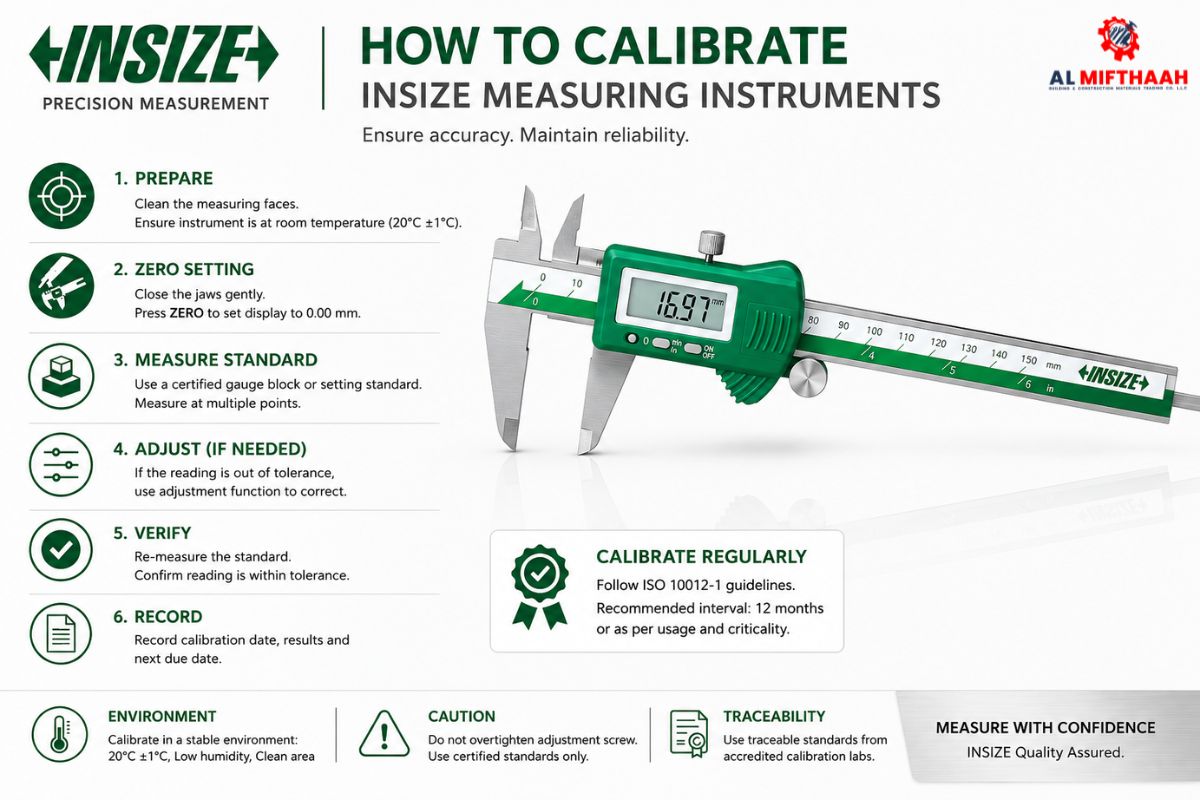
The process of comparing and adjusting a measuring instrument to obtain correct readings is called calibration. To calibrate INSIZE measuring instruments, compare the instrument measurements with certified reference standards to identify the deviations and adjust the tool as per the manufacturer instructions.
Therefore, in industries where accuracy is of paramount importance, slight measurement error can cause manufacturing flaws, loss of material resources, and quality problems. Calibration is essential when using calipers, micrometers, dial indicators, or height gauges to ensure accuracy and adherence to quality standards. When companies buy measuring instruments from reputable suppliers like INSIZE Measuring Instruments Dealers in Dubai, they realize the significance of regular calibration for ensuring consistent performance.
What is calibration?
Calibration is the act of adjusting a measuring instrument so that it is in agreement with a known and certified standard.
The goal is to:
- Ensure measurement accuracy
- Detect deviations or wear
- Improve product quality
- Meet inspection requirements
- Maintain traceability standards.
Furthermore, calibration is an important aspect of equipment maintenance for manufacturers and quality control teams.
Why does calibration matter?
Correct measurements have a direct impact on product quality.
If the calibration is not done properly, the following can happen:
- Incorrect dimensions
- Product rejection
- Customer complaints
- Increased production costs
- Compliance issues
However, industries that depend on machine measuring tools dealers in Dubai, value planned calibration as a result of it facilitating exact measurements and minimizing pricey mistakes.
Tools needed for calibration
Prior to calibration, ensure the following:
| Tool | Purpose |
| Gauge Blocks | Reference measurement standard |
| Calibration Certificate | Verification record |
| Clean Cloth | Surface cleaning |
| Inspection Report Sheet | Recording results |
| Temperature-Controlled Environment | Consistent measurement conditions |
Moreover, a controlled environment is needed, as temperatures can influence the accuracy of the measurement.
Process of calibration explained
1. Clean the instrument
Clean measuring surfaces of dust, oil, and debris. Small particles can cause errors in readings and can cause inaccurate results.
2. Inspect for damage
Check for:
- Rust
- Wear marks
- Loose components
- Bent measuring faces
In case of damage, tools should be repaired prior to calibration.
3. Set the zero reference
Close measuring surfaces and ensure the instrument is set to zero. If the reading is not correct, do the zero adjustment as per the manufacturer’s instructions.
4. Compare with certified standards
Use calibrated gauge blocks or reference standards. Measure several points throughout the range of the tool and compare these measurements to the certified values.
5. Record deviations
Record all measurements and look for any discrepancies between actual and reference values. This will help to understand if the instrument is lying within the tolerance level.
6. Adjust if necessary
When deviations are above the tolerances:
- Perform adjustment procedures
- Recheck measurements.
- After adjusting, the accuracy is confirmed.
7. Generate Calibration Records
Keep good records, such as
- Calibration date
- Instrument serial number
- Measurement results
- Technician details
- Next calibration schedule
However, correct documentation aids the conduct of quality audits and traceability needs.
Common calibration mistakes
These are some mistakes many users make without realizing that they are compromising their measurement accuracy:
- Failure to follow the recommended calibration schedule.
- Using damaged reference standards
- Calibrating at non-standard temperature
- Ignoring wear and tear
- Failing to document results
Furthermore, partnering with reputable suppliers, like the well-known INSIZE supplier in Dubai, can enable enterprises to acquire high-quality instruments and know-how to make sure their measurements are accurate.
Benefits of regular calibration
- Improved Accuracy
Accurate measures minimize production errors and inspection mistakes.
- Better Product Quality
Standard size measurements result in consistent product sizes and customer satisfaction.
- Reduced Costs
A reduction in the number of rejected products has a beneficial effect on the reduction of production losses
- Regulatory Compliance
Calibration enables organizations to meet the ISO quality management standards.
- Longer Tool Life
Routine checks will detect wear before it becomes serious.
Many industries sourcing equipment from Saif Precision tools supplier in UAE and other trusted providers follow strict calibration schedules to maintain operational efficiency.
Calibration success story in manufacturing
A precision engineering company was facing frequent quality inspection failure at the last stages of the manufacturing process. The team analyzed their quality assurance system and found that there were some measuring instruments that had not been calibrated for over a year.
The company adopted a well-structured calibration program for INSIZE measuring instruments and introduced monthly verification checks every quarter. After six months, accuracy of inspection was greatly enhanced, rejection of products was reduced, and customer complaints were reduced.
Moreover, this case demonstrates the direct benefits of regular calibration to manufacturing performance and profitability.
Bottom line
Calibration is not a quality requirement; it is an essential process to ensure accuracy, reliability, and efficient operation. With a systematic calibration procedure, businesses can be sure that their measuring tools provide consistent and reliable readings.
For manufacturers, quality inspectors, or workshop operators, correct calibration practices help to ensure product quality and avoid expensive mistakes. Almifthaah remains a trusted source for businesses seeking precision measurement products, technical assistance, and trusted INSIZE measuring instruments dealers in Dubai, all in one. In today’s world, regular calibration can help avoid major quality problems in the future and maintain measurement accuracy and compliance.
Frequently asked questions
Calibrate most instruments every 6 to 12 months, depending on the frequency of use, operating environment, and quality parameters.
Uncalibrated tools can give erroneous measurements, causing product defects, rework, and quality control problems.
Yes. In-house calibration can be done by organizations having a certified reference standard and trained personnel. But compliance verification may be necessary through external verification.
These tools are typically known as calipers, micrometers, height gauges, bore gauges, dial indicators, and depth-measuring instruments.
Changes in temperature may lead to size changes in the material, which could impact the accuracy of the measurement and the calibration.

How Long Do Mounted Points Last and When Should You Replace Them?
Everything You Need to Know About Tool Wear in Carbide Tipped Cutting Tools