
- December 5, 2025
- by Almifthaah
Step-by-Step Guide to Using Flap Wheels for Surface Finishing
Table of Contents
- What are flap wheels?
- Why are flap wheels used for surface finishing?
- Step-by-step guide to using flap wheels
- Tips for safe and clean finishing
- Common mistakes to avoid
- Conclusion
- Frequently Asked Questions
A flap wheel is a type of flexible sanding tool consisting of multiple layers of abrasive flaps which is used for deburring, blending, and finishing surfaces. Surface finishing is a significant aspect of metalwork and woodworking since it enhances the appearance, feel, and quality of a material. Flap wheels are used by many people in doing this task since they are flexible, easy to handle, and provide a smooth finish.
Therefore, an abrasive tools supplier Dubai tends to find credible tools in the hands of professionals in order to achieve the optimal outcome. This blog will describe the action of flap wheels and how you can use them to finish the surface evenly and clean step by step.
Table of Contents
ToggleWhat are flap wheels?
Flap wheels are polishing tools that consist of small flaps of sandpaper that are organized around a central hub. They are flexible and change with the surface when you rotate the wheel, and hence they are ideal in flattening edges, eliminating marks, and smoothing the surfaces before a paint or a coating. Additionally, they can be applied on metal, wood, plastic, and curved surfaces.
Why are flap wheels used for surface finishing?
Flap wheels are famous due to numerous reasons. To begin with, they provide a controlled finish without too much material being removed. Additionally, they minimize the possibility of scratching the surface.
Moreover, they come in numerous sizes and grit varieties, and it implies that you can select one depending on the outcome you intend to achieve. Abrasive tools dealers in Dubai are also selling them to many professionals due to their consistency and longevity.
Step-by-step guide to using flap wheels
Flap wheels are easy to use, but when done properly, they assist you to get a clean and professional finish. Here is the complete process.
1. Choose the right grit
Begin with the right grit size.
- Coarse grit: Used to remove deep marks, rust, or paint.
- Medium grit: To form or to smooth rough surfaces.
- Fine grit: To polish and finish off.
Furthermore, you should always make your selection depending on the material and the type of finish you desire.
2. Prepare your workspace
Clean and safe working environment Before starting, check that your workspace is clean and safe. Additionally, make sure that the area you are working on is well lit. To prevent the exposure to dust and particles, wear gloves, goggles, and a mask.
3. Install the flap wheel correctly
Attach the flap wheel to your grinder or drill. Free attachments may lead to vibration and lower the quality of finishing. This is why it is always better to check the connection twice before starting.
4. Test at low speed
Turn on the machine at a low speed. Flap wheels can move very fast, but it is better to start slowly to control the movement and avoid the undesired marks. Only after becoming comfortable with the movement, increase the speed.
5. Move in a steady direction
Turn the flap wheel in one direction. The surface can have patches formed by random movements or uneven pressure. In addition, maintain a steady hand and use light pressure.
6. Do not remain long in the same place
Do not dwell upon one thing too long. This may lead to heat accumulation and destruction of material. Rather, move freely in the whole space.
7. Look at the surface often
Take a break and look at your progress. This will prevent over-grinding. Moreover, it gives you the desired finish.
8. Change grits to improve results
Begin with a lower grit and proceed to a higher grit to be polished. This gradual grit process forms a smoother finish that is cleaner, like that of a flap disc supplier in Dubai.
Tips for safe and clean finishing
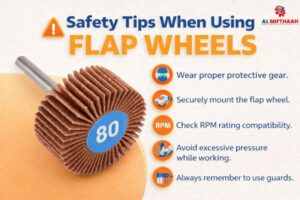
- Do not touch the spinning wheel with your hands.
- Wear safety equipment to prevent sparks and dust.
- Make sure that the material is in place beforehand.
- Wipe the flap wheel after use in order to prolong its life.
- Apply constant pressure, not pushing.
- Such minor actions will help you work easier and safer.
Common Mistakes to Avoid
Though flap wheels are easy to use, there are a few errors that can influence your quality of finish. The following are some of the errors to be avoided:
1. Using the wrong grit
Using the wrong grit might either take away too much, or it may not take away marks.
2. Pressing too hard
High pressure decreases the life of the brushes and can destroy the surface.
3. Ignoring safety gear
Particles and dust may cause an impact on your lungs and eyes; hence, protection is required.
4. Failure to clean the surface first
The dirt and oil decrease the performance of the wheel. That is why the surface must be wiped beforehand.
5. Skipping grit progression
Very coarse to very fine grit might result in uneven spots.
Furthermore, these errors can be avoided to make your wheel last longer and to increase your results.
Conclusion
Flap wheels are good equipment in the attainment of smooth and polished surfaces. They can change the appearance and the quality of any material entirely when utilized properly. A lot of professionals also choose to use tools that are of reliable brands, such as Saif Precision Tools, in order to be consistent in their operations.
However, it is a very simple process, but it should be done in stages to make the finish clean, even, and professional; this is a guarantee of a good finish all the time. With the correct grit, consistent movement, and regular checking of your progress, you can get good surface finishing without any trouble.
Frequently Asked Questions
It flattens surfaces, cleanses marks, and prepares materials to be polished or polished further.
They cut metal, wood, plastic, and curved surfaces with uniform and flexible cutting.
Choose coarse to remove, medium to smooth, and fine to polish.
They are indeed simple, safe, and beginner-friendly when they are applied with constant pressure and control.

Indexable Milling Cutter Explained: Benefits, Types, and Applications
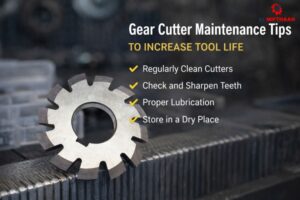
Gear Cutter Maintenance Tips to Increase Tool Life