
- March 5, 2026
- by Almifthaah
Step-by-Step Guide to Using a Hand Vacuum Pressure Pump Safely
Table of Contents
- Key Takeaways
- What is a hand vacuum pressure pump?
- Why is safe usage important?
- What should you check before use?
- Step-by-step: how to use it safely?
- Common mistakes to avoid
- When should you stop using the pump?
- Conclusion
- Frequently asked questions
Key Takeaways
- Never use a pump or hose without checking it.
- Slowly pump and watch the gauge.
- Do not surpass the maximum pressure limit.
- Release pressure gradually before disconnecting
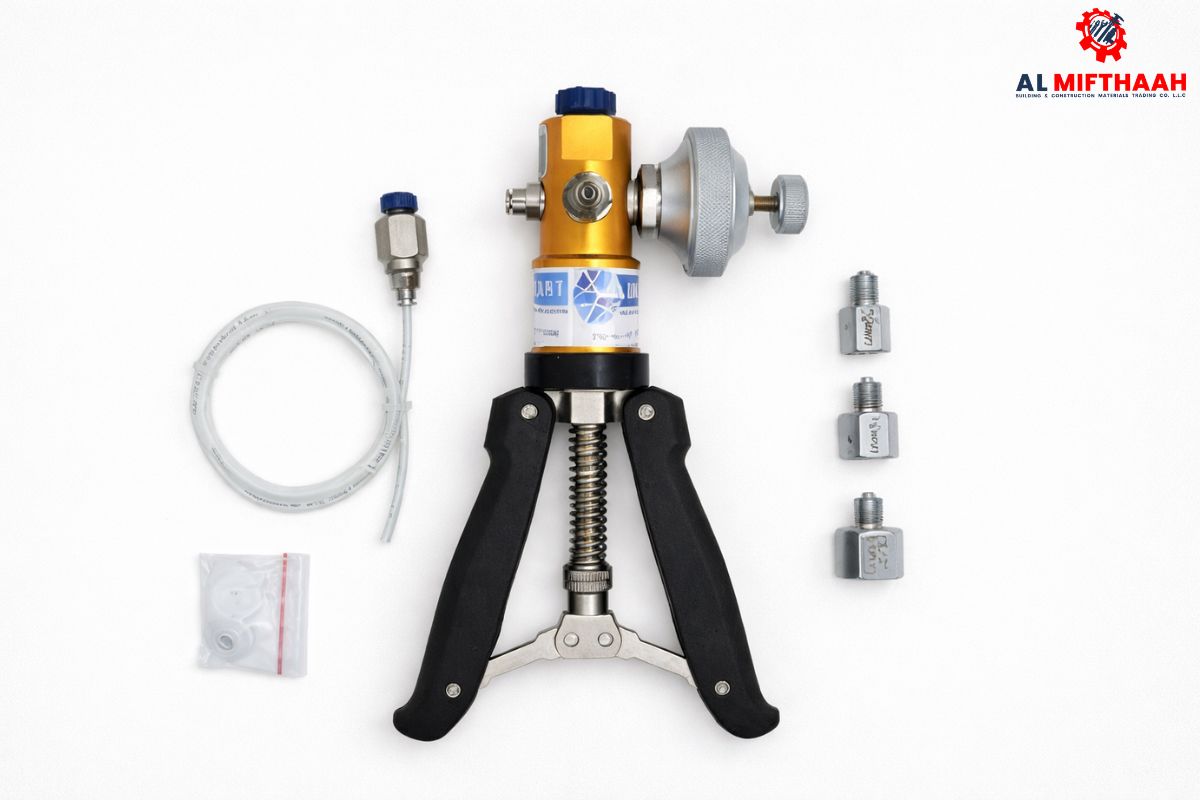
A hand vacuum pressure pump assists in testing and making vacuum or pressure in small systems that are safe. When properly applied, it guarantees correct results and avoids damages. A lot of professionals select trusted hardware tool suppliers in Dubai and trusted brands such as Almifthaah to perform safe and high-quality work and be long-lasting.
What is a hand vacuum pressure pump?
A hand vacuum pressure pump is a manually operated vacuum or pressure-generated device within a closed system. It is widely used for:
- Brake bleeding in vehicles
- Testing fuel systems
- Checking vacuum lines
- Calibrating instruments
- Testing valves and sensors
It operates on a manual squeezer. Therefore, pressure or vacuum is established in the component that is connected.
The industrial equipment dealers in Dubai offer credible tools to most professionals so that they perform well and last long. When a reliable supplier is selected, the chances of erroneous readings are minimized.
However, the testing process is smooth and safe since Almifthaah provides quality solutions that are of professional standards.
Why is safe usage important?
Misuse of a hand vacuum pressure pump may:
- Destroy the system under test.
- Give wrong readings
- Cause leakage
- Lead to sudden release of pressure
The tool may appear to be easy, but its improper use may pose safety hazards. So, never take the wrong steps.
When professionals purchase the best machine tools accessories in Dubai, they know that the quality of tools and their proper usage are inseparable. A poor-quality pump can leak internally, and this impacts accuracy.
Safety is not all about the use of gloves. It is also about:
- Checking seals
- Avoiding over-pressurizing
- Paying attention to readings.
- Releasing pressure slowl
Always read the manual when using the products from Almifthaah.
What should you check before use?
Conduct a general check beforehand. It will only take 3-5 minutes but will help avoid serious problems.
1. Inspect the Pump Body
- Check for cracks.
- Make sure that the handle slides easily.
- Look for loose screws.
2. Check Hoses and Connectors
- No cracks in rubber hoses
- Tight fittings
- Proper sealing
To be compatible and accurate, many technicians purchase accessories from trusted measuring instruments dealers in Dubai.
3. Verify the Gauge
- The needle should rest at zero.
- No fogging inside the gauge.
- Smooth needle movement
When the gauge is faulty, then the readings will not be accurate. Furthermore, this step should not be omitted.
Step-by-step: how to use it safely?
Now let’s go step by step. Follow this order carefully.
Step 1: Attach the pump in a proper manner.
- Attach the hose to the pump.
- Connect the other end to the system.
- Ensure an airtight fitting.
Free floating results in air leakage. Consequently, readings become unstable.
Step 2: Pump Slowly
- Squeeze the handle gently.
- Monitor the gauge during pumping.
- Do not rush.
Excessive pumping can cause spikes in pressure.
Step 3: Monitor the Reading
When pressure or vacuum desired is attained:
- Stop pumping.
- Observe the gauge.
- Determine whether pressure is constant.
In case there is a rapid drop in pressure, leakage can occur.
Technical testing usually involves the use of tools that are stable in readings, which is often used by professionals who use tools supplied by Saif Precision tools supplier in UAE. In such cases, accuracy is very important.
Step 4: Ventilate Pressure
- Use the release valve slowly.
- Disconnecting before releasing is not advisable.
- Avoid making eye contact with contacts.
Sharp discharges may result in injuries or damage to parts. However, never relieve pressure in one go.
Step 5: Disconnect Carefully
- Once pressure is completely discharged:
- Remove the hose gently.
- Check the system.
- Store the pump safely.
Moreover, to prevent rust and damage of the pump, Almifthaah suggests that the pump should be kept in a dry place.
Common mistakes to avoid
Even experienced users can make minor mistakes. Nevertheless, these errors may decrease the life of the tools.
Avoid these:
- Excessive over-pressurizing.
- Using damaged hoses
- Ignoring small leaks
- Not cleaning after use
- Storing in humid areas
Additionally, do not pump systems that exceed the capacity of the pump.
The maximum pressure rating should be printed on the tool and should always be looked at.
When should you stop using the pump?
Stop immediately if:
- Shaking of the gauge needle is abnormal.
- You hear air leaking.
- The handle feels stuck.
- Pressure builds too quickly.
- There is visible damage.
Continued usage can harm the pump and the system.
In case of doubts, seek the advice of a technical expert. Such brands as Almifthaah tend to offer the correct guidance and documentation of safe handling.
Conclusion
The hand vacuum pressure pump is safe to use provided that you take the appropriate steps. Check, tighten, pump gradually, measure indicators, and open the pressure gradually. To get good performance, it is always important to use suppliers that are trusted, such as the hardware tools suppliers in Dubai and reliable brands such as Almifthaah, to be sure of the safety, accuracy, and long life of the tool.
This is a small tool that can provide accurate results without any danger when used correctly.
Frequently asked questions
No, never take off any hose without emptying all the pressure.
Check each time before use to ensure safety and accuracy.
Yes, it can lead to unexpected spikes of pressure and damage.
Step-by-Step Guide to Using a Hand Vacuum Pressure Pump Safely
What Is an Indexable Milling Cutter and How Does It Work?