- October 24, 2026
- by Almifthaah
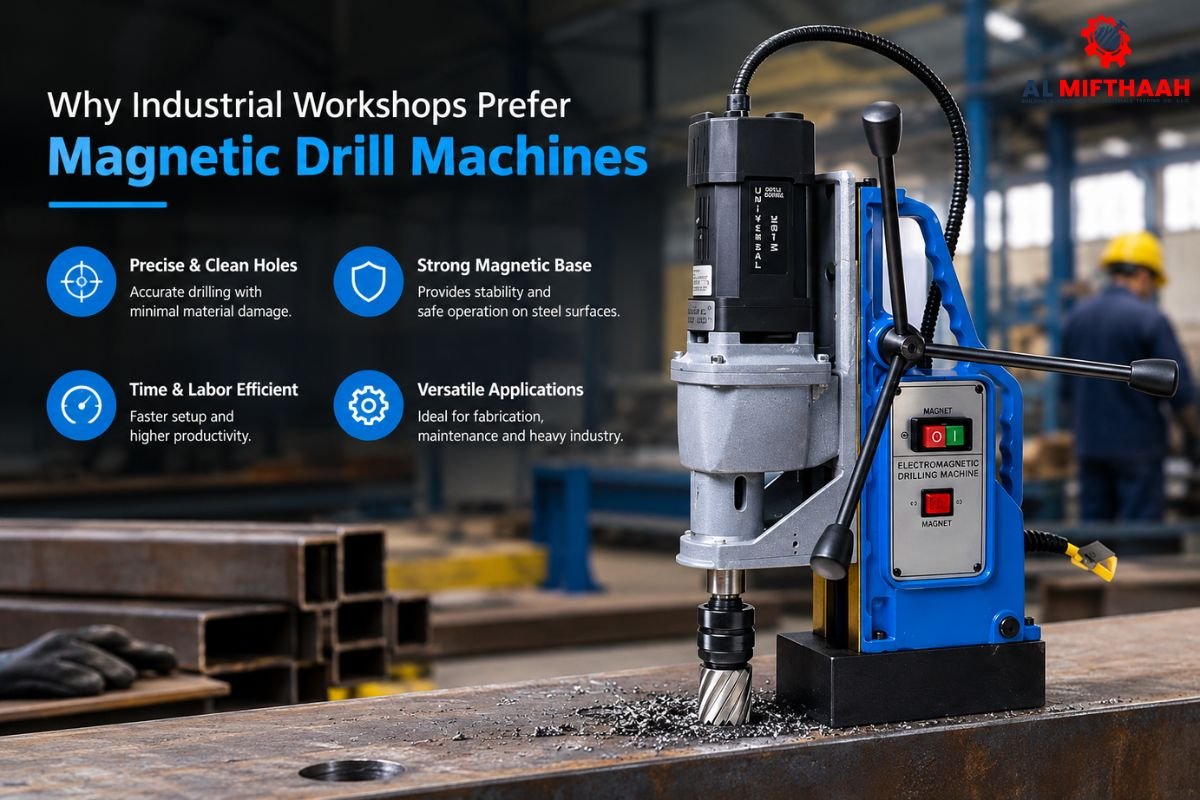
Why Industrial Workshops Prefer Magnetic Drill Machines
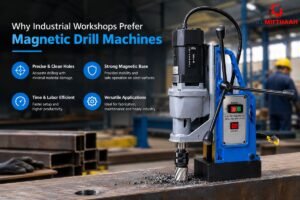
For industrial workshops, magnetic drilling machines are their favorite equipment as they drill wide, accurate holes in steel without the need for any bulky tools or carrying any significant components to a drilling machine. The device has a strong electromagnetic base that secures the machine onto the workpiece, allowing the rotating blade to do the job properly.
Furthermore, with the aid of these machines, fabrication shops, field workers, and maintenance teams benefit from a quicker process with clean holes and less waste of tools. This guide will introduce you to how magnetic drilling machines work and why you should buy one in Dubai.
Table of Contents
ToggleKey takeaways
- Magnetic drill machines hold steel securely and are suitable when making large, accurate holes out of reach of a fixed drill machine.
- Workshops can minimize rework and keep projects on schedule, with the help of portability, quick setup, and clean holes.
- When assessing drilling machine suppliers in Dubai, consider the machine, but also the supplier itself, including warranties, spares, and support.
- Machine life is extended, and operators are safe through regular cleaning, timely cutter changes, and proper storage.
What is a magnetic drill machine, and how does it work?
A magnetic drill machine is a portable drill machine that has a powerful electromagnet that is built into the base. When the magnet is turned on, it is capable of holding the steel surface very tightly, and the machine remains stationary while the motor moves the cutter through the steel. The operator isn’t required to hold the weight of the tool or counteract vibration as the cutter bites into a thick plate, as with a typical drill handpiece.
The design is very simple. The motor and gearbox are located in the body; the base houses the magnet and a feed mechanism, and sometimes the cutting fluid is fed directly to the cutter via a coolant system. The majority of models are single-phase or three-phase powered, and a few have an integrated battery pack for use in remote locations. The machine can cut in positions that are not possible with a fixed tool, as the workpiece acts as the anchor.
Core components explained
- Electromagnetic base: Provides a strong, controlled base to hold the machine to the steel.
- Motor and gearbox: Provide torque for thick plate and large diameter cutters.
- Feed handle: Cuts at a consistent speed and rate, which can help to create straight, clean holes.
- Coolant system: Maintains the temperature of the cutter and removes chips from the cutting area.
Knowing these components will assist you in determining the quality. A more stable holding ability is obtained when using a strong, flat, well-machined base, and a smooth feed is obtained that prevents chatter during the cutting process. Therefore, before you scrutinize the marketing claims, examine each of these components when inspecting a machine.
Why do industrial workshops prefer this machine?
The same issue for workshops that produce structural steel, repair machines, or build frames for equipment arises daily. Very large holes need to be drilled precisely as called out in the drawing, frequently on difficult or heavy parts to move. A magnetic drill is the answer because it moves the tool to the work, rather than the work to the tool.
- Portability Without Sacrificing Precision
The machine mounts to the workpiece so it can be used on beams, plates, tanks, or machine frames that are too large to fit under a stationary drill press. A fitter will be able to drill a clean hole on the shop floor, or at a construction site, without having to wait for a crane or a flatbed truck. This flexibility brings down the time gap between planning and execution.
That is not to the detriment of precision. The magnet keeps the tool in place on the surface, holding it perpendicular and minimizing wander. The end product is a hole that matches bolts, pins, or mating parts the first time.
- Faster Setup and Higher Output
Setup takes minutes. The surface is cleaned, the machine is set up, the magnetic field is turned on, the cutter is placed in alignment, and you begin drilling. Previously, marking, transporting, and clamping jobs were completed in three steps and can be done in one job. Those saved minutes can translate to productive increases in output and client satisfaction in workshops that have several jobs on the go each day.
- Better Hole Quality and Fewer Rejects
The firm grip minimizes wobbling, so holes are formed round and at the proper angle. Fewer misaligned holes lead to less rework, less steel going to scrap, and fewer assembly delays. This reliability often becomes more important than the machine’s price over a period of over a year.
- Safer Working Conditions
There’s no more strain and fatigue as operators no longer have to be holding a heavy handheld drill for extended periods of time. The magnetic base also prevents the machine from slipping across the surface when the cutter perforates it. Many models have auto-stop switches and overload protection; combined with the proper training and guards, this makes the work much safer.
How do magnetic drills compare with other drilling methods?
All drilling techniques are useful in a workshop. The proper one depends on the part size, location of the work, and size of the hole to be drilled. The table below summarises the main differences
| Feature | Magnetic Drill Machine | Pillar Drill Press | Handheld Drill |
| Works on large steel parts | Yes, in the shop or on site | Limited by table and column size | Yes, but harder to control |
| Portability | High | Low | High |
| Large hole capability | Strong, with annular cutters | Moderate | Small to moderate |
| Setup time | Minutes | Longer, often needs fixturing | Quick |
| Accuracy on thick steel | High | High | Lower |
| Best use | Fabrication, site work, maintenance | Bench work and small parts | Light-duty tasks |
This comparison reveals why it is important for many workshops to have more than one tool. A pillar drill press will still work well for small repetitive bench work. A handheld drill is used for fast work with thin stock. The magnetic drill is an ideal solution to the hole-drilling problem on thick steel, which is not easily accessible to handheld drills or presses.
However, the typical job must be the starting point for buying, rather than the tool. A regular structural workshop will fare much better with a magnetic drill than a sheet metal shop will.
How can you choose a reliable supplier?
It’s not just about selecting the machine; it’s about selecting the right place to purchase it. A good dealer provides genuine parts, honest specifications, demonstrations, and after-sales service. If you are looking for the best drilling machine suppliers in Dubai, you will notice that there are numerous suppliers available, and by coming up with a structured approach, you will be able to distinguish between the strong suppliers and the weak ones.
Where to start your search?
The first step is to create a short list of dealers that carry the known brands and are able to tell you in simple terms how the various models differ. Local suppliers definitely have an edge; they do not have a long wait to visit for service, they see machines and test them on steel like their own, and they can request a service visit.
A specialization of the kind of local supplier you like to compare is a shop like Saif Precision, UAE, which supplies precision tools. Before committing to a local supplier such as saif precision tools supplier in UAE, read the specifications of a precision tool.
Don’t only go for the lowest price. An inexpensive machine that has weaker magnets, fewer spares, or is not warranted may represent a much higher total cost of ownership due to downtime and spares.
Questions to ask before buying
- Do they have cutters, magnets, and spare parts available?
- What is covered by the warranty, and how long does it last?
- Can the dealer show the machine on steel that is similar to what you work on the majority of the time?
- Do you have technical support after the sale, either on site or by phone?
- Do they provide training for operators on safe use?
If a dealer can answer these questions with one hundred percent certainty, and with no hesitation, then he or she is likely to be a dealer you can trust in the long run.
Which features should you check before buying?
The specifications are different from model to model, so look at the features that are relevant to your everyday use. These specifications can be matched to the typical jobs you might have by experienced industrial equipment dealers in Dubai, helping you avoid paying for capacity you will never use or purchasing a machine that is unable to handle your heaviest jobs.
The most important features include the following:
- Magnet holding force: It measures the machine’s ability to hold heavy or curved pieces.
- Motor power and speed range: Determine the speed at which and the size of cutters suitable for the machine.
- Maximum drilling diameter and depth: Should match your largest planned holes with some margin.
- Coolant feed: Prolongs cutter life and trims down the holes end to end, particularly in thick steels.
- Safety features: Auto-stop switches, overload protection, and sturdy guards reduce the risk of injury.
Moreover, when considering a purchase order, ensure that the dealer explains all the features of the actual machine. The direct sight of the controls, magnet release, and feed handle is so much better than a brochure.
What maintenance keeps a magnetic drill running longer?
A well-kept magnetic drill will last many years in a workshop. Failure to maintain, however, results in weak magnets, overheating, and unexpected downtime. Most of these problems can be avoided with simple routines.
- Wash the base of the magnet after every session to wash off any chips, dust, and cutting fluid residue.
- Check the power cord, switches, and magnet surface for damage before use.
- Drill using the recommended cutting fluid and maintain the coolant tank during drilling.
- Change worn cutters as soon as they get dull, as it will cause the motor to overheat, slow down production, and cause unnecessary wear.
- Keep the machine dry, out of direct heat and moisture.
Always stock the following types of consumables: Cutters, Pilot pins, Coolant. These things are generally available with drilling tools suppliers in UAE, so that the workshops do not experience any delays due to shortages of drilling tools when ordering them in advance.
Additionally, regular service by a competent service engineer will detect minor faults in the early stages. They can arrange for the machine to undergo inspections and repairs by the industrial equipment dealers in Dubai that provide service contracts, ensuring the machine remains in reliable condition.
Bottom line
Magnetic drill machines are the preferred choice in industrial workshops due to their precision and speed with steel where the job occurs. They reduce setup time, enhance hole quality, and make heavy work safer for the operators. The right machine for you will depend on what you do on a regular basis, and the right partner will depend on the support you receive, on having genuine parts, and on having honest advice.
Once you’re prepared to invest, check the local market for magnetic drilling machine dealers in Dubai that can show you the machine, provide quality consumables, and guarantee the tool after purchase.
Frequently asked questions
It can perform high-precision and large-hole drilling in steel and iron, particularly in large heavy parts which are not suitable for a drill press.
No. They must be attached to a ferrous surface such as mild steel or cast iron for the magnet to adhere to.
Hands-on demonstrations, real spares, warranty, and quicker assistance when a machine stops during a job are offered by a local dealer.
Inspect it prior to each shift and plan for a professional inspection every six months if heavily used.
Why Industrial Workshops Prefer Magnetic Drill Machines

How Thick Should Copper Shim Stock Be for Electrical Busbar Connections?