
- September 12, 2026
- by Almifthaah
Can Shim Stock Be Used for Electrical Insulation?
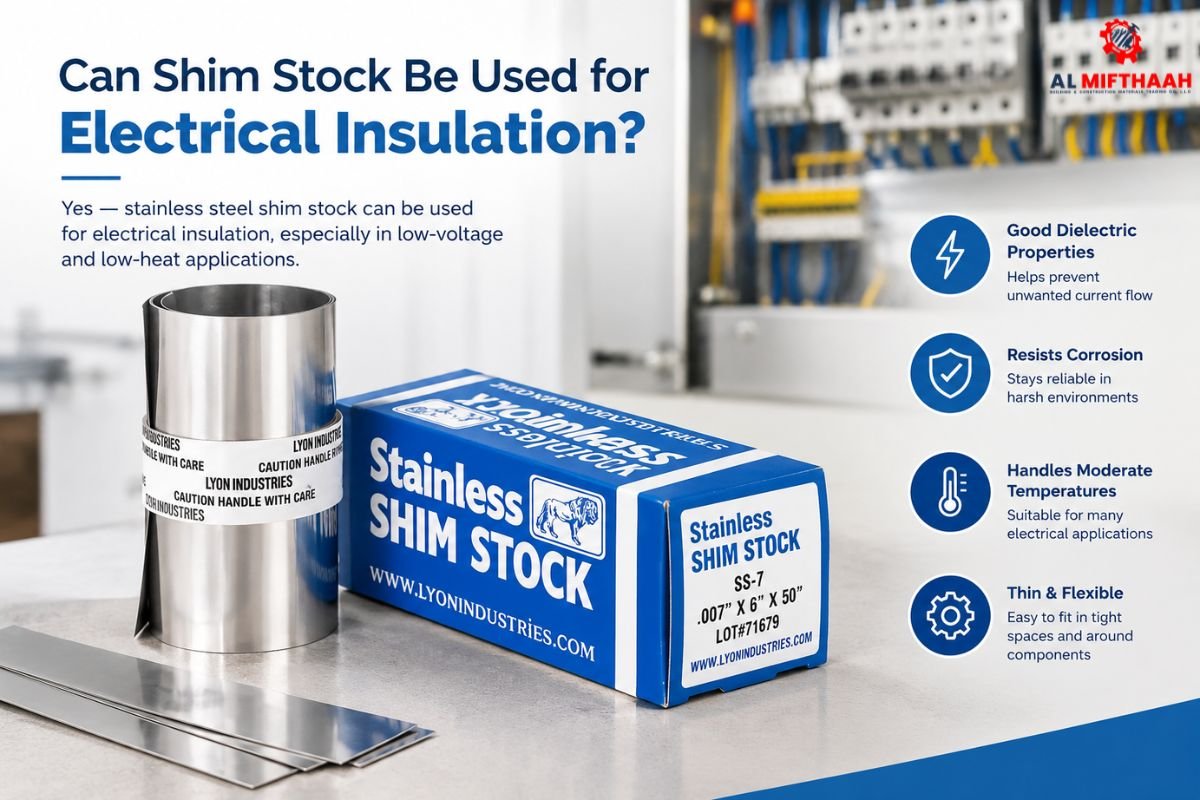
According to the topic, the answer is no; that doesn’t apply to metals. Standard shim stock made of stainless steel, brass, or aluminum conducts electricity. However, it’s a completely different story for non-metals. Materials like polyester (Mylar), phenolics, fish paper, and nylon are really used for electrical insulation in applications like switchgear, motor windings, transformer assemblies, and delicate electronics. The material is what matters, not the form of the shim. If you need insulation materials, don’t just ask for ‘shim stock’; specify which type of material you need.
Table of Contents
ToggleKey takeaways
- Since metal shims are conductive, they cannot be used for electrical insulation purposes.
- Provided with non-metallic shims, electrical insulation is achieved because of their ability to fill exact gaps without exception.
- To define the safety of insulation in use, dielectric strength, thickness tolerance, and thermal stability are considered.
- Reliable suppliers of Shim Stock in Dubai can suggest the best materials for the requirements of the users.
What is shim stock?
Shim stock is a thin material that has been precision gauged, and it is sold either in sheets or rolls, and it has different uses. For example, machinists use shim stock for leveling out machines, while engineers use this shim to fix tolerances on machines after assembly. Electricians, on the other hand, use shim stock for separating live wires from grounded surfaces.
Therefore, a source of confusion comes from people’s tendency to think of shim stock as metal due to its mechanical use in shops. In fact, the two most common types of shims used in the mechanical industry are brass and stainless steel shims. Moreover, the essential point about shim stock is that it is defined by its shape, namely, flat and thin. Therefore, it may consist of composite materials and plastics.
Metal shim stock and electrical conductivity
Electrons at the surface of the metals move around freely through air. All of the metals listed belong to this subclass of metals: stainless steel shim, brass shim, and aluminum shim. Just placing a shim in the circuit between an energized electrode and a grounded structure does not provide insulation but the conductive path instead.
The importance of the issue is often underestimated since shim stock material gets picked in an arbitrary way on the workshop floor. Some workers need a simple spacer, pick up whatever is available, and forget what the metal is. In most cases, this is okay for mechanical devices but might become an issue in electrical applications. This point is emphasized by inspections of electrical cabinets in the UAE. The hardware tools suppliers in Dubai give you the right advice regarding such matters.
Which shim stock materials actually insulate?
Several special non-metal shim materials are produced particularly for electrical and thermal isolation, which include the following:
- Polyester film (Mylar): A strong dielectrically property with the thinnest available gauges of 0.05mm; this is used for lining motor slots and insulating transformers.
- Fish paper (vulcanized fibre): The long-established insulating material used in switchgear and coil windings; this is a strong and solid material that is resistant to corrosion.
- Phenolic sheet: It has a wide thickness range and is used where both mechanical strength and insulation are necessary, such as terminal blocks.
- Nylon and PTFE shims: Excellent insulators with additional thermal and chemical resistance, commonly utilized in control panels.
- Fiberglass-reinforced laminate (G10/FR4): Combines significant mechanical strength with good dielectric properties, typically used in high-voltage space applications.
Furthermore, every insulation material has specific dielectric ratings, which are usually measured in kV/mm, and that rating must be equal to or above the working voltage in question. An insulating shim that does not indicate its dielectric value should not be trusted in the proximity of a live current.
Metal vs non-metal shim stock: A side-by-side look
| Property | Metal Shim Stock (Steel/Brass/Aluminum) | Non-Metal Shim Stock (Mylar/Phenolic/Fish Paper) |
| Electrical conductivity | Conductive | Insulating |
| Typical dielectric strength | None (0 kV/mm) | 15–200 kV/mm depending on material |
| Mechanical strength | High | Moderate to high |
| Heat resistance | Very high | Varies, moderate to good |
| Common use | Alignment, spacing, wear surfaces | Winding insulation, panel spacers, terminal isolation |
| Cost | Generally lower per sheet | Higher for specialty grades (PTFE, G10) |
This is the part most buyers actually need before they order anything. If the job involves current at all, the left column is off the table.
Where is insulating shim stock used?
Non-metallic shim stock turns up in more places than most people expect:
- Motor and generator rewinding, where Mylar or fish paper separates copper windings from the slot walls.
- Transformer manufacturing, layering insulation between windings to prevent short circuits.
- Electrical panel fabrication, isolating busbars from enclosure walls.
- Battery pack assembly, spacing and insulating cells in EV and industrial battery modules.
- Precision electronics housings, keeping PCBs from contacting a metal chassis.
Therefore, in each case, the shim is doing two jobs at once: filling a physical gap and blocking current. That’s exactly why the material choice can’t be an afterthought.
Choosing the right shim stock supplier
Dubai’s industrial base runs on automotive workshops, marine engineering, precision manufacturing, and electrical contracting, and all of them create steady demand for metallic and non-metallic shim material alike. A few things separate a supplier worth repeat business from one you’ll regret:
- Stocks certified dielectric grades, not just generic plastic sheets sold as “insulation.”
- Provides thickness tolerance data, since insulation performance depends on consistent gauge.
- Ask what the shim will be used for, including voltage and environment, before recommending a product.
- Offers cutting and slitting services, so you’re not buying a full roll for a small repair job.
Good Shim Stock suppliers in Dubai usually ask a clarifying question or two before quoting, instead of just processing an order for “shim stock” with no material specified. That question is often the difference between a safe installation and a returned shipment.
Why does sourcing matter as much as material?
The quality of the shim material is important, as inconsistencies in quality can lead to failure. Even minor deviations in the thickness of the shim material can affect performance in precision electrical applications. Therefore, it is essential that the supplier is of good repute. Almifthaah provides high-quality shim material and precision tools all over the UAE. Their products are manufactured based on given specifications, which is critical in electrical applications.
Most buyers decide on hardware tool suppliers in Dubai merely on the basis of price. However, shim stock is not a commodity. The electrical application needs to have the right material, thickness, and performance.
A reputable Lyon shim stock supplier in Dubai may issue certificates of quality. Almifthaah is one of the recognized suppliers of insulation-grade shim stock in Dubai. When evaluating shim stock suppliers, mechanical and dielectric grades should be taken into account. A trustworthy supplier will provide a variety of gauges, materials, and technical assistance in electrical applications.
Final word
Shim stock can serve electrical insulation purposes, but only when it’s made from the right material. Metal shim has no place near live circuits. Polyester, phenolic, fish paper, and laminate shims are established, reliable choices when specified correctly. The real work happens in sourcing: finding a supplier who understands the difference and stocks both lines with proper documentation. Saif precision tools supplier in UAE is one of them.
For UAE workshops and contractors, Almifthaah remains a dependable source for both mechanical and insulation-grade shim material, backed by the kind of technical guidance that keeps a simple spacer from turning into a safety problem later.
Frequently asked questions
No. Metal shim stock conducts electricity and should never sit between live conductors and grounded surfaces, regardless of thickness or type of metal.
Polyester film (Mylar) and fish paper are the most common choices, both with strong dielectric performance and a long service history in motor and transformer manufacturing.
Yes. Thinner insulating shims generally handle lower voltages safely, while thicker phenolic or fiberglass laminate shims are rated for higher voltage separation.
Only if the plastic has a documented dielectric rating. Generic plastic sheet without certification isn’t something to assume is safe for electrical isolation.
Within their intended use, yes. Materials like phenolic and G10 laminate hold up well mechanically, though they don’t match metal’s wear resistance under heavy friction.
Specialist industrial tool suppliers, including Almifthaah, stock certified insulating shim materials alongside standard metal shim stock for UAE workshops and contractors.
It depends on material and thickness. Ratings vary widely, from a few kV/mm for thin films to over 100 kV/mm for laminate composites.
Yes. Despite its age, fish paper remains common in coil winding and switchgear because it insulates reliably at a low cost.

Common Magnetic Drill Machine Problems and Solutions

How Does a Gear Cutter Work? Understanding the Gear Cutting Process

