- September 10, 2026
- by Almifthaah
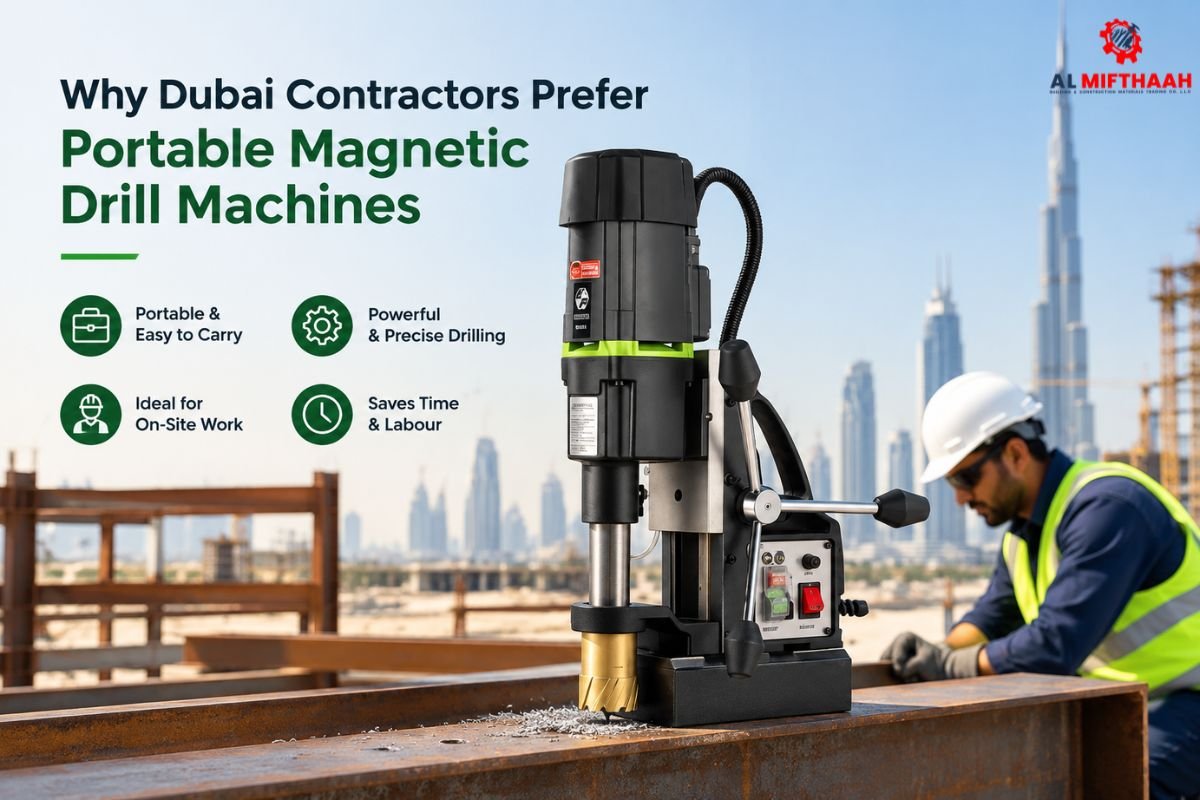
Why Dubai Contractors Prefer Portable Magnetic Drill Machines
Structural steel fabrication often takes place at construction sites in Dubai. It is not easy to move girders, pillars, containers, ship frames, and gantries. Portable magnetic drill machines make the work easier. These machines attach to the steel and drill accurate holes on site, avoiding the need to carry heavy steel parts into a workshop.
However, Dubai’s hot climate, limited site access, and the large size of construction projects lead to the increased use of portable machine tools. The machines come to the steel rather than moving the materials to the machines.
Table of Contents
ToggleKey takeaways
- The magnetic drill can be operated in vertical, horizontal, or overhead positions, all without moving cumbersome steel.
- When compared to bench drilling, setup takes minutes instead of hours.
- Supercut Rotabor drill bits make it possible to create holes much more quickly with less burr and cleanup.
- Trusted magnetic drilling machine distributors in Dubai ensure good after-sales service and products.
What is a magnetic drilling machine?
A magnetic drilling machine is a portable drilling machine that has an electromagnet instead of a fixed table. Once the magnet is turned on, the machine will lock itself to any flat metal surface such as a pipe, plate, or even a vertical column. It will not move an inch as you drill thick steel.
Most of the magnetic drilling machines throughout the steel yards in Dubai have a single-phase power supply, weigh 10 to 20kg, and utilize annular cutters after 12mm. This is the reason they are fast machines, as an annular cutter only cuts a ring of metal from the workpiece rather than all of the volume. A hole like 26mm in diameter through the 10mm plate can be achieved in less than a minute.
Why does portability matter on Dubai job sites?
Steel fabrication in the UAE doesn’t happen inside a workshop most of the time. A single project can call for holes drilled into.
- Structural steel columns already erected on a high-rise frame
- Ship or barge hulls at Dubai Maritime City or the Jebel Ali yards
- Storage tanks and pipelines at oil and gas facilities
- Gantry beams and crane rails in warehouses across Jebel Ali and DIP
None of that steel is coming to you. A bench drill press needs the material brought to it, needs a flat horizontal setup, and needs a crew to lift and hold anything past a small plate. A portable magnetic drill goes up the scaffold, clamps onto a vertical column, and gets the job done in place. No crane, no repositioning, no second trip out.
There’s a labor cost angle here too, and it gets overlooked more than it should. Structural steel and fit-out schedules in the UAE run tight, and every hour a crew spends moving steel to a drill press is an hour lost from the actual build. Contractors who’ve made the switch tend to say the same thing. the real saving isn’t the tool; it’s the hours the crew gets back.
How do magnetic drills compare to bench and hand drills?
| Factor | Magnetic Drill | Bench Drill Press | Handheld Drill |
| Works on-site, on installed steel | Yes | No | Limited |
| Drills vertical/overhead surfaces | Yes, with magnetic base | No | Yes, but unstable |
| Hole accuracy on thick steel | High | High | Low to moderate |
| Speed on 20mm+ steel | Fast with annular cutters | Fast, but material must be moved | Slow, high bit wear |
| Portability | High (10–20 kg, carry handle) | None, fixed installation | High |
| Best for | Structural steel, tanks, shipbuilding | Workshop-based repetitive drilling | Light, thin-gauge material |
Moreover, bench drills still win for high-volume shop work on small parts. Hand drills are fine for thin sheet metal. Magnetic drills take the middle ground that neither of those covers well. Thick structural steel, in place, with the accuracy you’d expect from a drill press. The best drilling machine suppliers in Dubai offer the right machine.
Where do contractors actually use them in Dubai?
- Structural steel erection – drilling bolt holes into I-beams and columns after they’re already standing
- Shipbuilding and marine repair– hull plating and deck sections that can’t be dismantled to move
- Oil, gas, and petrochemical fabrication– tank shells, flanges, pipe supports
- Steel signage and structural framework– the heavy-gauge mounting work behind large-format signage displays
- General metal fabrication workshops– repeatable holes in beams, plates, and channel sections before assembly
What should you check before buying one?
Not every magnetic drill sold in the UAE is built to survive daily site conditions. Heat and dust wear out a cheap unit fast, sometimes within a season. Before buying, check.
- Magnetic holding force– at least 1,000–1,300 kg of pull for structural steel work
- Stroke length and motor power– a longer stroke and more wattage handle deeper holes without stalling out
- Compatibility with annular cutters– confirm it takes standard Weldon-shank cutters, Rotabor included
- Duty cycle rating– a machine built for continuous use will outlast one meant for occasional home-shop drilling
- Local availability of spares – a good machine sitting idle for three weeks waiting on a part from overseas isn’t doing anyone any favors
Furthermore, that last point is where a lot of buyers get caught out. A cheap unit is easy to find online. A machine backed by a local parts and service chain is harder to find, and it’s exactly why buying through established magnetic drilling machine dealers in Dubai tends to pay off over the years, not at the checkout counter.
Why does the rotabor cutter pair so well with magnetic drills?
The drill is only half the job. The cutter decides hole quality, cutting speed, and how often you’re back at the counter buying more consumables. Supercut rotabor cutters are annular, broach-style cutters built specifically for magnetic drill machines, and fabricators here reach for them for a few reasons that hold up in practice.
- They cut a hole in a fraction of the time a twist drill takes on the same steel
- Chip removal is cleaner, which keeps heat down and wears the bit less
- The edges come out burr-free more consistently, so there’s less finishing work after
- Re-grindable versions stretch a lot more life out of a single cutter than a standard one
Because of that, most contractors buying a magnetic drill end up buying cutters at the same time, which is exactly why finding Supercut Rotabor cutter dealers in Dubai who also stock the machines saves a second round of supplier hunting. Almifthaah keeps both on the same shelf for this reason. No site team should have to juggle one supplier for the drill and another for the consumable that actually keeps it cutting.
How to choose the right supplier in the UAE?
The UAE isn’t short on tool importers, but structural steel work doesn’t leave much room for a bad batch of cutters or a drill that dies mid-project. A few things tend to separate the suppliers worth using from the ones that aren’t.
- Stock depth – can they get you replacement cutters and magnet bases without a long import wait?
- Technical knowledge– can the staff actually match cutter diameter and shank type to your machine, or are you guessing on your own?
- Track record with fabrication and steel contractors– not just retail counter sales
- Genuine brands over unbranded imports– especially for cutters, where cheap steel dulls fast, and the downtime costs more than the price ever saved
Among the best drilling machine suppliers in Dubai, the ones that stick around are almost always the ones who treat the sale as the beginning of the relationship instead of the end of it. A magnetic drill that fails on a live site is the contractor’s problem, not the shop’s.
Almifthaah has built its name among drilling tools suppliers in the UAE on that same idea. stocking magnetic drills, Rotabor cutters, and precision tooling together, with technical backup that structural steel and fabrication teams actually need when something goes wrong mid-project. As a Saif Precision tools supplier in the UAE, the brand also carries the wider range of precision cutting and finishing tools contractors need beyond the drill itself, which is a big part of why repeat buyers stop shopping around after the first order.
Therefore, if you’re comparing options, it’s worth checking a supplier’s range against other Saif Precision tools suppliers in UAE listings before you commit. Prices don’t move much between suppliers here. Stock availability does, and that’s the detail that actually affects your schedule.
Final word
Portable magnetic drills gained popularity in Dubai due to one single fact. A lot of the structural steel work is done in workshops and not on-site. Drilling is done on scaffolds, steel columns, and installed hulls. Carrying these heavy objects to a workshop is time-consuming. The portable drills are taken right to the steel, making it work faster and easier. Drilling tools suppliers in UAE provide the right tool always, which are helpful for workers.
The selection of the appropriate machine and Rotabor cutter is also crucial. Using a proper mix can avoid delays and enhance drilling operations. The reliable supplier should have both machines and cutting accessories in stock. Almifthaah can assist UAE contractors in selecting appropriate equipment and ensure that their necessary consumables are in place.
Frequently asked questions
Precise hole drilling of steel structures on location, such as beams, plates, tanks, and pipelines, without first transporting the material to a press in the workshop.
Some structural operations require at least 1,000–1,300 kg of magnetic pull to ensure stability during drilling in thick steel. For drilling through thick steel, it requires at least 1,000 – 1,300 kg of pulling force to maintain stability of the base during drilling.
Yes. Its magnetic base keeps it secure no matter what its angle is, which is why they’re found on columns, hulls, and overhead beams.
A drill press is stationary, and the material is conveyed to it. A magnetic drill that attaches to the steel wherever it is.
Unlike a solid twist bit, rotabor cutters only remove a ring of material and can machine large diameter holes in steel far faster and cleaner.
Not really. They require a strong magnetic bond which is normally 6mm and higher. Thin sheet is better handled another way.
Request brand documentation, see if they have spares and cutters for your brand, and verify that they routinely work with fabrication or steel contractors.
Yes, as long as they’re attached with a safety chain or strap on top of the magnetic base, which is the norm and very often mandatory on UAE sites.
Depends on steel thickness and hole volume, but could be re-grindable Rotabor cutters and can typically last for several regrinds before needing a replacement.
The majority of portable units are single-phase. For some heavy-duty applications in shipyards, oil & gas sites, three-phase is required.

Common Magnetic Drill Machine Problems and Solutions
How Does a Gear Cutter Work? Understanding the Gear Cutting Process

