

- July 23, 2026
- by Almifthaah
Why Your HSS End Mill is Wearing Out Fast
Table of Contents
ToggleKey Takeaways
- Heat buildup is usually the real reason an HSS end mill dies early
- Wrong RPM or feed rate wrecks the cutting edge faster than people expect
- A quick weekly check on your tools prevents most surprise breakdowns
- Buying from a proper HSS endmill supplier in Dubai makes a bigger difference than most operators assume
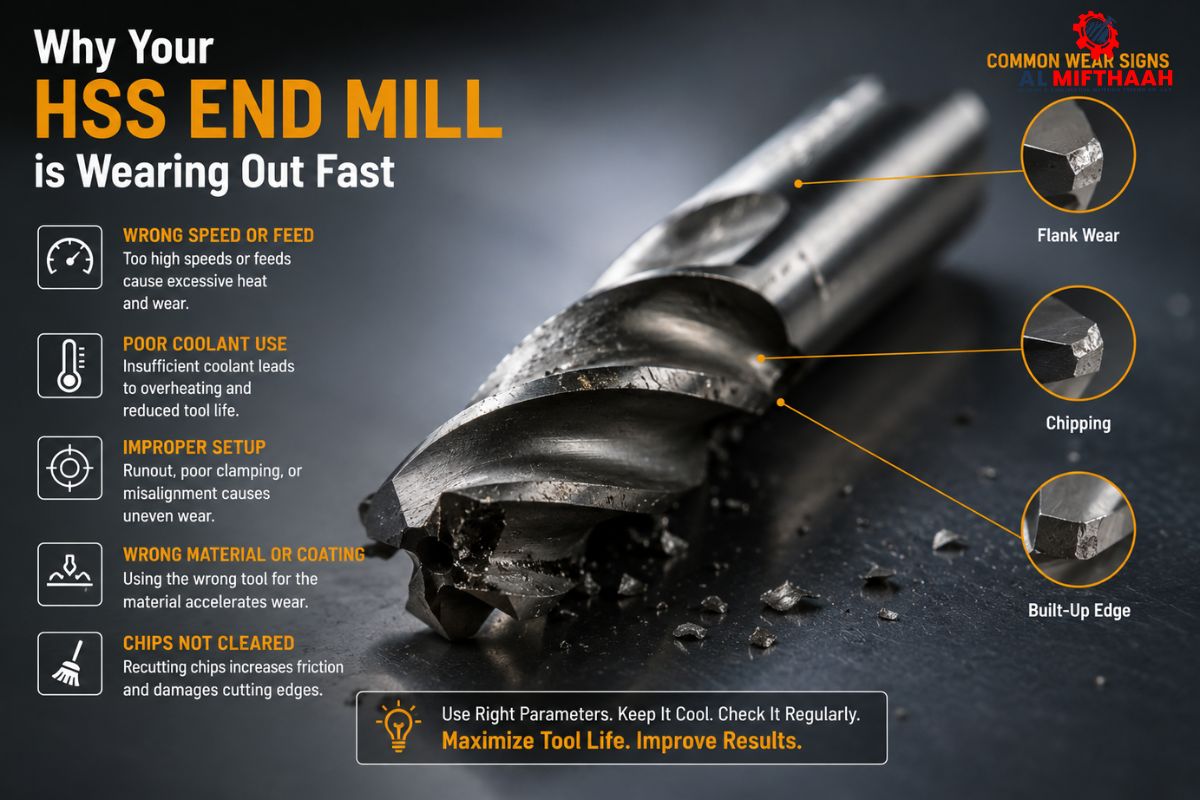
In case the HSS end mill is getting worn quickly, the common reason is excessive heat, inappropriate cutting speed, inadequate flow of coolant, or usage of the wrong tool for the materials. These factors can damage the cutting edge and shorten the length of life of the tool. By addressing the root cause, you can ensure that your tool lasts longer.
This issue is very common in many workshops in Dubai. You can buy a good-quality tool, follow the regular operations, and still notice that it wears out quickly. The good news is that the reasons are often simple and easy to tackle. This blog will highlight some hidden reasons behind the premature HSS end mill wear and provide several useful tips to improve the service life and efficiency of the tools.
Common signs of tool wear
Most operators don’t catch wear until the tool has already failed. By then it’s too late to save it; you’re just replacing it.
Here’s what to watch for before it gets that far:
- Rough or uneven finish on the workpiece
- Odd noise or vibration while cutting
- Discoloration along the cutting edge
- Chips or flakes appearing faster than usual
- Having to push the machine harder to do the same job it used to do easily
If two or more of these show up together, the tool is wearing faster than it should. Catching it early saves the workpiece and takes some strain off your spindle too.
Furthermore, comparing notes with a solid cutting and milling tools Dubai supplier can help you figure out fast whether it’s a tool problem or a usage problem, since the two can look identical from the outside.
Wrong cutting speed problems
This is probably the single biggest cause of early tool failure, and it’s usually a small mistake, not a big one. Run the spindle too fast or too slow, and the tool pays for it either way.
Too fast, and heat piles up quickly. HSS doesn’t handle heat well. Once it crosses a certain temperature, the edge softens, and a soft edge dulls within a handful of passes.
Additionally, too slow causes a different kind of damage. Instead of cutting cleanly, the tool starts rubbing against the material. That friction generates its own heat, and the edge takes damage all the same, just more slowly.
A rough reference, by material:
| Material Type | Recommended Speed Range | Common Mistake |
| Mild Steel | Medium speed | Running too fast |
| Aluminum | High speed | Running too slow |
| Stainless Steel | Low to medium speed | Ignoring heat buildup |
| Cast Iron | Medium speed | Using wrong feed rate |
None of this is complicated once you know your machine and the tool specs your supplier gives you. It’s more about consistency than expertise.
Poor coolant usage issues
People underestimate coolant. It’s not just there to keep things clean; it’s doing most of the work of pulling heat away from the cutting edge. Without it, heat has nowhere to go.
A few mistakes come up again and again:
- Low-quality coolant
- Coolant flow that stops and starts during the cut
- Wrong coolant type for the material being cut
- Blocked or badly aimed nozzles
Steady, well-aimed coolant keeps the tool temperature stable through the whole job. On its own, this fix can add real time to your tool’s life, especially on longer runs.
Not sure what setup fits your machine? Ask your HSS endmill supplier in Dubai. A good one will walk you through it based on your exact material and job, usually without charging you for the advice.
Material mismatch mistakes
This one happens more than people admit, especially in shops running several jobs a day and reaching for whatever tool is closest.
HSS end mills are built for softer metals and general steel work. Push them onto harder or more abrasive materials without adjusting anything, and they wear out fast, sometimes chipping outright.
For harder materials or faster production work, a lot of shops have shifted to a Single Flute Carbide Endmill UAE team relies on, mainly because carbide holds up better under heat and keeps its edge longer. HSS still makes sense for general work, though, especially when cost matters more than speed.
Matching the tool to the job, instead of running one tool through everything, is one of the cheapest ways to cut down on wear.
Machine vibration and rigidity
Vibration doesn’t get talked about enough, but it does real damage. Even a small amount during cutting can cause microchipping along the edge, and that weakens the whole tool over time.
The usual suspects:
- A loose tool holder or collet
- Worn spindle bearings
- Weak or uneven workpiece clamping
- Too much tool overhang
Fixing this starts before the job even begins. Check the grip, check the clamping, and keep the overhang within spec. It’s a five-minute check that saves a lot of grief later.
Moreover, shops that work with established best milling tools dealers UAE, professionals tend to get better setup advice as part of the relationship, and that alone tends to cut down on how often tools need replacing.
Storage and handling errors
Sometimes the damage happens before the tool even touches the workpiece, and it has nothing to do with speed or coolant at all.
Common ones to avoid:
- Tools tossed together loosely, edges knocking against each other
- Sitting exposed to moisture or humidity
- Getting dropped or knocked around during transport
- Not being wiped down after use
None of this takes much effort to fix. Proper cases, a quick wipe after use, and a dry storage spot go a long way toward protecting a tool you already paid for.
Choosing the right supplier
The tool itself matters more than people give it credit for. Not every HSS end mill is made to the same standard, and the supplier you choose ends up shaping how long your tools actually last.
A supplier worth sticking with should give you:
- Consistent quality, batch after batch
- Real guidance on speed and feed, not guesswork
- A range of tools suited to different materials
- Someone who picks up the phone when a tool underperforms
Almifthaah has built a name for itself among Dubai workshops for exactly this, tools that hold up under daily production pressure instead of just looking good on paper. A lot of shops keep coming back to Almifthaah for both HSS and carbide tooling, along with straight advice on getting more out of each tool.
Working with an experienced supplier tends to mean fewer surprises and someone to call when something isn’t cutting the way it should.
If you’re also looking at precision tooling beyond standard end mills, it’s worth comparing specs with a Saif Precision Tools supplier in UAE teams already trust, especially for more specialized machining work.
Bottom line
Typical issues such as incorrect cutting speed, inadequate cooling, the wrong tool for the material, or an unstable machine setup are factors that lead to fast tool wear. Early detection of the actual cause will help you to enhance tool life and machining performance.
Check your current machining setup and make the necessary adjustments. Making just a few changes can extend the lifespan and improve the performance of your HSS end mill.
Searching for the best cutters? Select a reputable endmill Dubai supplier that can suggest the optimum endmill for your application and not merely what is in stock.
Frequently asked questions
This is typically due to heat buildup, incorrect cutting speeds, inadequate coolant flow, or an inappropriate tool for the material.
When properly installed, at the right speed and coolant, a good HSS end mill will last for hundreds of passes.
Depends on the job. Carbide will be more heat-tolerant in hard materials, and HSS is a more practical and economical choice for general use.
Yes. If the coolant flow is inconsistent or the flow is not directed at the edge, then the heat will accumulate on the edge, and that’s when it starts wearing.
Look for additional heat, a more soapy feel, unusual sounds, or chips that are occurring at a faster rate than they would on the same machine.
More than one might imagine. The microchipping along the edge is caused even by slight vibration, and this is cumulative over time to result in reduced tool life.
Store them apart in dry cases, clean them after every use, and never allow them to bump into one another when stored.
Search for consistent quality, genuine technical support, and a broad range of tools, which local workshops already know and trust.

Common Magnetic Drill Machine Problems and Solutions

How Does a Gear Cutter Work? Understanding the Gear Cutting Process

