- July 21, 2026
- by Almifthaah
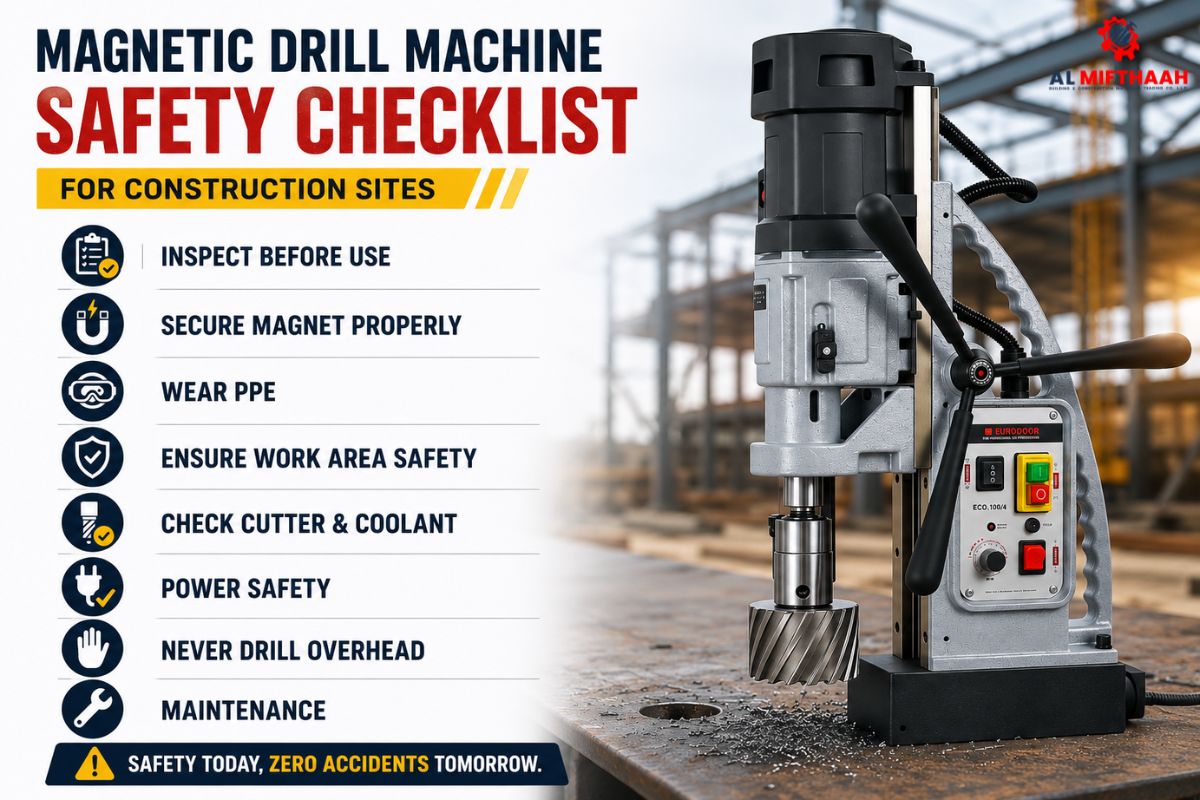
Magnetic Drill Machine Safety Checklist for Construction Sites
Table of Contents
ToggleKey Takeaways
- Safety with a magnetic drill machine all depends on the pre-operation checks it has gone through.
- Before the machine starts to work, the surface and magnet strength checks will help avoid most of the accidents on site.
- Wear PPE and make sure that the electric wires do not pose safety hazards during the operation.
- Getting equipment from reputable suppliers of magnetic drilling machines in Dubai usually results in after-sale service and safer equipment.
The safety procedures of a magnetic drill machine for construction sites must consist of the proper inspection of the machine, magnet base inspection, use of PPE, safe operation procedure on the metal surface, etc. If you do everything correctly, you will lower accident risks and guarantee safety for your workers.
Today, magnetic drilling machines can be found on construction and fabrication sites because they are compact, do not require a stand or clamp and make clean holes in steel in a few seconds, but this convenience leads to negligence of safety measures. A magnet base that loses grip halfway through a hole, or a worker who skips PPE because “it’s just one quick hole,” is how injuries happen.
This is a practical checklist, the kind a site supervisor or operator can actually use before, during, and after running one of these machines.
Why does magnetic drill safety matter?
Construction sites move fast, and there’s a lot going on around you. A magnetic drill adds one more variable because the whole thing depends on an electromagnetic base holding firm to a metal surface. If that grip fails while the drill is running, the machine can shift, tip, or drop, and that’s a lot worse when you’re working overhead or on something vertical.
Some of the more common risks:
- Loss of magnetic grip on an uneven or painted surface
- Electric shock from a damaged cable or wet conditions
- Cuts from metal shavings or swarf
- The drill bit binding and kicking back
- Bad mounting on curved or thin metal
Moreover, there’s also the quieter cost. A machine that isn’t maintained properly or is used carelessly produces sloppier holes, and that means rework and wasted material on top of the safety risk. Most crews who’ve been doing this a while don’t treat the checklist as optional. They’ve usually seen what happens when someone skips it.
Pre-operation inspection checklist basics
- The first step to noticing most of the issues is to give a quick visual inspection before the machine makes contact with whatever it will be working on. It takes just a few minutes, but skipping this step can be quite costly.
Some of the basic checks prior to beginning operations include:
- Examine the power cord and the plug for any signs of fraying, cuts, or other damage to the insulation or for any exposed wires.
- Check the magnetic base for any dents, scratches or dust.
- Inspect the drill or the annular cutter is sharp and well tightened.
- Test the coolant or lubrication system, if the machine has one.
- Check that the on/off switch and emergency stop actually respond
- Check the safety chain or strap, especially for overhead or vertical work
| Inspection Point | What To Check | Why It Matters |
| Power cable | No cuts, exposed wires, or loose plug | Prevents electric shock |
| Magnetic base | Clean, flat, free of rust or paint chips | Full magnetic grip |
| Cutter/drill bit | Sharp, correctly tightened | Avoids binding and kickback |
| Coolant system | Filled, no leaks | Keeps bit cool, extends life |
| Safety chain | No fraying, secure attachment points | Backup if magnet loses hold |
| Emergency stop | Responds instantly | Fast shutdown if something fails |
Furthermore, if a machine fails any of these checks, pull it from service until it’s fixed. This is where buying from established magnetic drilling machine dealers in Dubai actually pays off. Getting parts and repairs quickly means this checklist doesn’t turn into a week of downtime.
Correct personal protective equipment use
Even a well-maintained machine won’t protect someone who isn’t wearing the right gear. Magnetic drilling throws off hot shavings and sparks and produces real vibration, so the PPE needs to match that.
Minimum PPE for magnetic drill operation:
- Safety glasses or a full-face shield for flying swarf
- Cut-resistant gloves, kept away from rotating parts
- Steel-toe boots
- Hearing protection in enclosed or noisy areas
- Fitted clothing and long sleeves, nothing loose that could catch
However, gloves are worth a second thought here. Right at the cutter, a loose glove can be worse than no glove at all, because fabric catches and pulls a hand toward the bit before anyone can react. A lot of experienced operators keep gloves on while handling hot metal and pull them off the second the drill starts spinning.
Safe mounting and surface preparation
This is a fact that most accidents occur at this stage and not during the drilling process itself. Magnetic drilling only works when the surface below is smooth, straight, and suitably thick.
Safety procedures for mounting:
- Remove paint, rust, oil, or dirt using a wire brush.
- Make sure the thickness of the steel complies with the requirements of the machine (refer to the manual).
- Avoid surfaces with heavy pitting, curves, or seams unless your device is specifically designed for those conditions.
- On vertical or overhead jobs, attach the safety chain before the magnet goes on.
- Try to gently move the machine after mounting as a quick test of the hold.
A magnet can look seated properly and still shift once vibration builds up. On scaffolding or steel frames, or anything overhead, that’s a real problem for whoever’s underneath. Thirty extra seconds spent cleaning and testing the surface is nothing next to what happens if you skip it.
Operating procedures during drilling work
Once the machine is mounted and checked, the job isn’t done. The actual drilling still needs attention.
During operation:
- Keep hands away from the cutter and swarf ejection area.
- Use steady pressure; don’t force the bit.
- Keep coolant flowing so the bit doesn’t overheat or warp.
- Never walk away from a running machine, not even for a minute.
- Watch where the cable sits so it doesn’t get pinned under the base or tangled.
- Only switch off the magnet once the drill has fully stopped and the bit is clear.
Machines bought from solid Drilling tools suppliers in UAE often come with safety interlocks built in, which stop the magnet from disengaging while the motor is still running. It’s a small feature that matters a lot more than it sounds, especially for anyone working at height.
Common mistakes to avoid
Even experienced crews repeat a handful of mistakes. Knowing them ahead of time saves a lot of grief.
- Skipping the surface clean: Paint or rust on the steel drops the magnetic hold noticeably.
- Ignoring a damaged cable: A frayed cable is a shock hazard now, not a “fix it later” item.
- Overloading the machine: Running a bit or a bigger cutter than the machine is rated for strains on both the motor and the magnet.
- Forgetting the safety chain: common on vertical jobs where people assume the magnet alone is enough
- Rushing: Most accidents happen because someone tried to save two minutes by skipping a step.
Therefore, supervisors should treat this checklist as part of the daily routine rather than something covered once in training and forgotten. A five-minute check before each use, done consistently, is what actually keeps a crew safe.
Choosing reliable equipment suppliers
Safety doesn’t end with how the machine gets used. Where it was bought, and how well it gets maintained afterward, matters just as much. Working with trusted magnetic drilling machine dealers in Dubai gets contractors genuine parts, real servicing, and equipment that actually meets current safety standards.
Things worth checking with a supplier:
- A track record with construction and fabrication companies
- Spare parts on hand, like brushes, cutters, and cables
- Clear manuals and safety documentation
- After-sales support for repairs and calibration
- Pricing without hidden servicing fees tacked on later
Almifthaah has built a solid name among contractors in the region for supplying well-maintained drilling equipment, along with the accessories needed to keep it running safely. If you’re comparing options among the best drilling machine suppliers in Dubai, it’s worth checking reviews and asking directly about warranty terms before you commit.
There’s also a case for keeping your suppliers simple. A lot of construction companies find it easier to work with one source for their whole toolkit rather than juggling several vendors. Almifthaah offers this kind of combined setup, which a lot of site managers prefer once they’ve tried the alternative. If you’re also sourcing precision cutting accessories, checking with a Saif Precision tools supplier in UAE alongside your main drill supplier rounds out a toolkit that’s actually built for the job.
Bottom line
The magnetic drill is a very effective asset at a construction site. Yet it is capable of staying safe as long as the workers really go through the checklist of operations and do not omit those elements that may look irrelevant to them. In fact, most incidents can be attributed to missed operations rather than the equipment malfunction, which is a vital fact to keep in mind. It is a good idea to cooperate with the reputable industrial equipment dealers in Dubai like providers of tools, protective apparel and consumables to make this process less expensive and less complicated.
If your site needs new equipment, or it’s just been a while since anyone checked what you’re already using, reach out to Almifthaah for genuine machines, spare parts, and guidance that actually fits your project. It’s a short conversation, and it’s a lot cheaper than the alternative.
Frequently asked questions
It drills precise holes into steel and other metal surfaces on construction and fabrication sites, using a magnetic base for stability instead of clamps.
Yes, as long as a safety chain or strap backs up the magnetic base. That backup is what stops the machine from falling if the grip weakens.
Most machines need a minimum thickness, often around 6 mm, for full magnetic strength. Check the manufacturer’s manual for the exact number.
Yes. Rust, paint, or debris on the surface weakens the magnetic hold significantly, raising the risk of the machine shifting or slipping mid-drill.
Safety glasses, cut-resistant gloves, steel-toe boots, and hearing protection are the baseline gear needed when operating a magnetic drill machine on-site.
Check the cable, magnetic base, cutter, and safety features before every use. Full servicing should happen on the schedule your supplier recommends.
Reputable magnetic drilling machine dealers in Dubai, Almifthaah among them, offer reliable machines with proper documentation, spare parts, and after-sales servicing support.
Poor surface preparation, skipped inspections, and a missing safety chain account for most accidents involving magnetic drill machines on construction sites.

Common Magnetic Drill Machine Problems and Solutions

How Does a Gear Cutter Work? Understanding the Gear Cutting Process

