- March 11, 2026
- by Almifthaah
HSS vs Carbide Endmills: Which One Should You Choose?
Table of Contents
- Key Takeaways
- What are HSS endmills?
- What are carbide endmills?
- Key differences between HSS and carbide
- When should you choose HSS endmills?
- When should you choose carbide endmills?
- Conclusion
- Frequently asked questions
Key Takeaways
- HSS endmills are cheap and versatile and can be used in general machining.
- Carbide endmills are faster and have a longer tool life.
- The HSS tools are more suitable in soft materials and manual machines.
- Carbide tools are suitable in CNC machining and high-production setups.
The selection of HSS or carbide endmills is based on the material, budget, and machining requirements. HSS tools are versatile and cost-effective, whereas carbide tools are faster and durable.
Moreover, the knowledge of their differences can be used to enhance cutting performance, and suppliers such as Almifthaah can be used to choose appropriate machining tools.
What are HSS endmills?
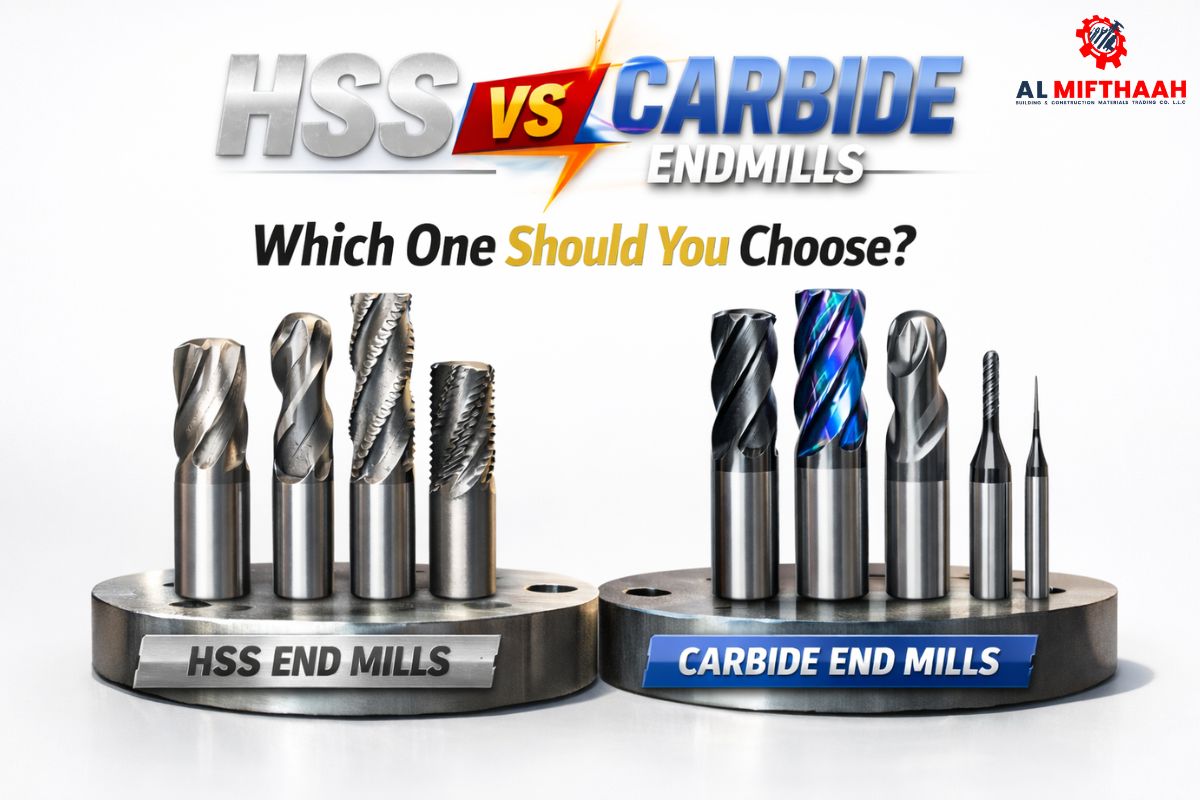
HSS (high-speed steel) endmills are cutting tools that are produced using alloy high-speed steel that is used to cut at moderate speeds and cuts across a wide range of machining operations. They are usually applied in the milling of soft materials like aluminum, mild steel, and plastics.
The HSS tools are popular since they are cheap, sharpening is easy, and they are not brittle as compared to carbide tools. However, they are still used in numerous workshops to perform general machining. When seeking high-quality and affordable milling tools, businesses seeking an HSS endmill supplier in dubai are likely to find a supplier.
The typical benefits of HSS end mills are the following:
- Less expensive than carbide tools.
- Good resistance to breakage
- Simple regrinding and servicing.
- Manual and CNC millable.
Additionally, HSS tools are effective in the workshop where cutting speed is moderate and tool flexibility is a factor.
What are carbide endmills?
Carbide endmills are constructed using tungsten carbide that is very hard and resistant to heat. These are high-speed machining and cutting tools. Consequently, they are usually applied in CNC machining processes where speed and precision are important.
Carbide tools are able to retain sharp cutting edges even in high temperatures. Hence, they are suitable for machining hard metals, stainless steel, and high-strength alloys. A lot of manufacturers will be willing to deal with a reliable carbide endmill supplier in Dubai to maintain the quality of tools.
The main advantages of carbide endmills are the following:
- Ability to cut at a high speed.
- Excellent wear resistance
- Long tool life
- Better surface finish
Carbide tools are, however, brittle compared to HSS tools and therefore need stable machines and appropriate cutting conditions.
Key differences between HSS and carbide
It is much easier to select the main differences of these tools and understand them. These two tools are similar in the way they do their work but differ in the way they operate under different machining conditions.
The features are frequently compared by professionals who frequently use cutting and milling tools from Dubai suppliers, and then buy them.
| Feature | HSS Endmills | Carbide Endmills |
| Material | High-speed steel | Tungsten carbide |
| Cutting Speed | Moderate | Very high |
| Durability | Good | Excellent |
| Cost | Lower | Higher |
| Flexibility | More flexible | More brittle |
| Best Use | General machining | High precision machining |
Therefore, the appropriate tool is based on machining speed, material hardness, and production needs. Wise selection enhances the efficiency and life of the tool.
When should you choose HSS endmills?
HSS endmills are suitable in workshops where there is a need for versatile tools to do the daily machining operations. The tools are effective in cases where cutting speeds are moderate and machines are not necessarily extremely rigid.
Furthermore, small workshops, repair shops, and manual milling processes tend to use HSS tools due to their reliability and cost-effectiveness. When choosing high-quality HSS cutting tools, many industrial buyers look at the best milling tools dealers UAE.
HSS tools are appropriate when:
- The use of soft materials such as aluminum.
- Working on manual milling machines.
- Requirement of tools that are not easily broken.
- Having a small machining budget.
Therefore, HSS tools continue to play a significant role in most machining processes even with the increase in carbide tools.
When should you choose carbide endmills?
Carbide endmills are more appropriate in high-performance machining where speed, accuracy, and productivity are requirements. These are particularly handy in the contemporary CNC machining settings.
As an example, a Single Flute Carbide Endmill UAE is normally employed in machining aluminum since it enhances the removal of chips and cutting efficiency. Also, when cutting hard metals, carbide tools have a better surface finish.
Carbide endmills are suggested in cases where:
- Hard metal or alloy machining.
- Operation of high-speed CNC machines.
- Manufacturing bulk parts.
- Needs an accurate and smooth surface finish.
Moreover, the machining time is minimized with the help of carbide tools. Additionally, they are more expensive in the short term but tend to increase productivity in the long term.
Conclusion
HSS endmills are cost-effective and versatile, whereas carbide endmills are faster and more durable. The correct decision will be determined by your machining requirements and materials. Reliable suppliers such as Almifthaah and Saif Precision tools supplier in UAE assist industries in choosing the milling tools that are reliable in performance.
Frequently asked questions
Carbide endmills tend to have a longer life since they do not easily heat and wear off when used in high-speed machining processes.
Yes, HSS tools are still in use in many workshops in general machining and cost-effective operations.
Yes, carbide is harder and more brittle, and therefore, stable machines and appropriate cutting conditions should be considered.
HSS vs Carbide Endmills: Which One Should You Choose?
How to Choose the Right Gear Cutter for Industrial Applications